See our photo guide to the five must-visit sights in Saigon ↗
Last checked: 5 November 2026. Fares, ticketing methods and opening times may change; always check the operating company HCMC Metro HURC before you travel. This is an independent visitor guide, not an official metro website.
1. What is Ho Chi Minh City Metro Line 1?
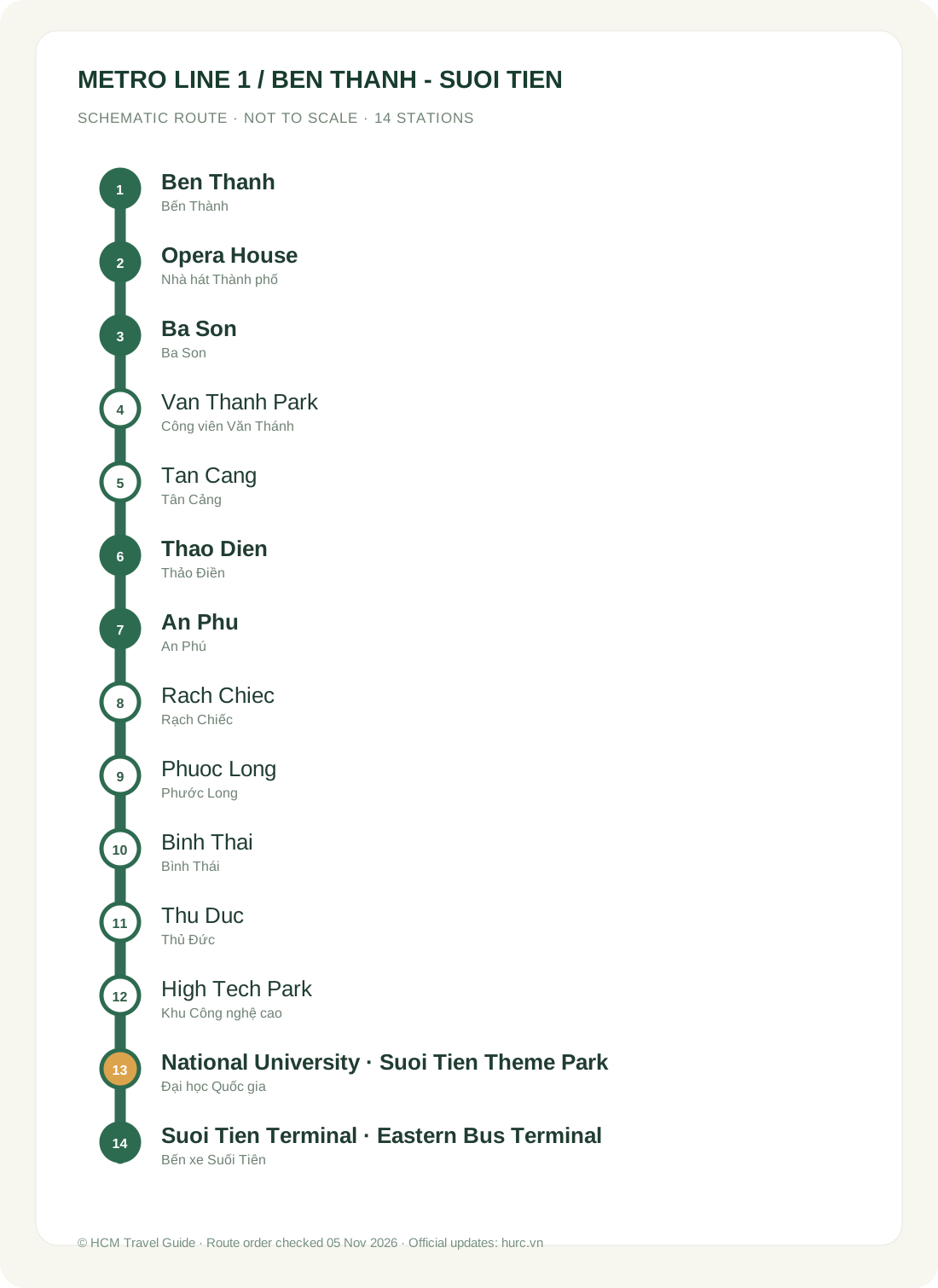
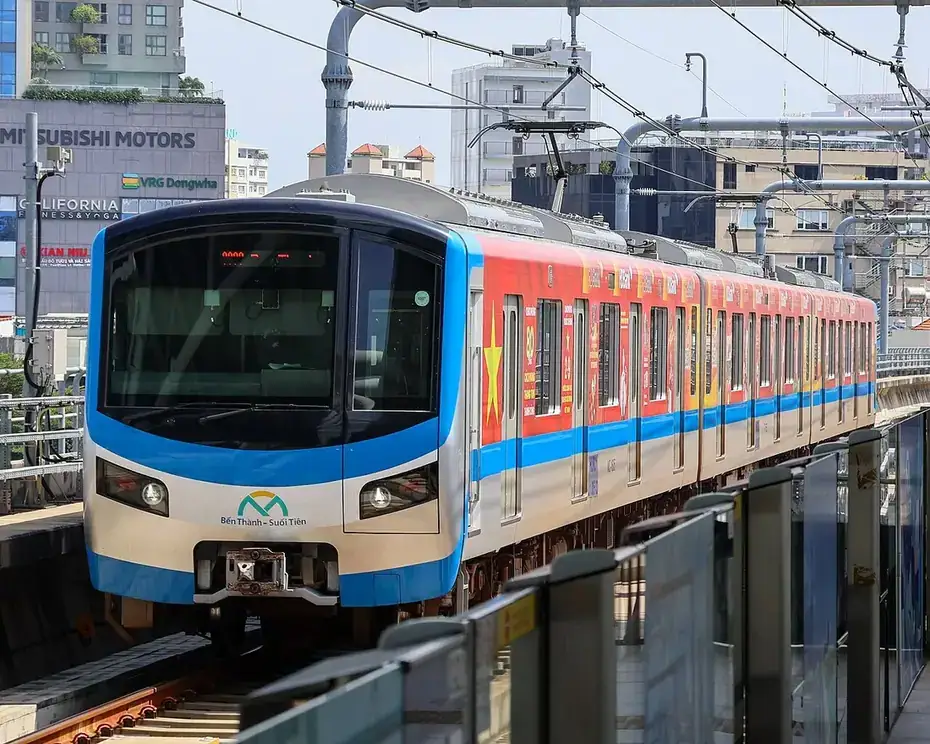
Ho Chi Minh City Metro Line 1, also called the Ben Thanh–Suoi Tien Line, is the city's first operating metro route, launched on 22 December 2024. It links central Saigon with the eastern districts over approximately 19.7 kilometres. There are 14 stations: three underground at Ben Thanh, Opera House and Ba Son, followed by 11 elevated stations.
The journey from end to end takes about 30 minutes on the train; that does not include waiting, buying a ticket or transferring to a hotel or attraction. Metro Line 1 does not go directly to Tan Son Nhat International Airport or the Cu Chi Tunnels. Use another mode of transport for those destinations.
2. Metro Line 1 route map: all 14 stations
The simple diagram below lists stations in travel order, from central Ben Thanh to Suoi Tien Terminal. Reverse the list when heading towards the city centre. The illustration is schematic, not a geographically accurate street map.
| No. | Station (Vietnamese) | Helpful for visitors |
|---|---|---|
| 01 | Bến Thành | Ben Thanh Market, downtown shopping, September 23 Park |
| 02 | Nhà hát Thành phố (Opera House) | Saigon Opera House, Dong Khoi, Nguyen Hue, nearby KOKONIC shops |
| 03 | Ba Son | Saigon River, Ba Son neighbourhood and riverside walking |
| 04 | Công viên Văn Thánh | Van Thanh area and local park access |
| 05 | Tân Cảng | Connections towards the Landmark 81 / Vinhomes Central Park area; check last-mile directions |
| 06 | Thảo Điền | Thao Dien cafés, shopping and neighbourhood exploration; onward transport may be needed |
| 07 | An Phú | An Phu area and nearby shopping centres |
| 08 | Rạch Chiếc | Eastern urban neighbourhoods and local connections |
| 09 | Phước Long | Local neighbourhood transfer point |
| 10 | Bình Thái | Eastern urban area and neighbourhood connections |
| 11 | Thủ Đức | Thu Duc area; plan the onward journey |
| 12 | Khu Công nghệ cao (High Tech Park) | Saigon Hi-Tech Park area |
| 13 | Đại học Quốc gia (National University) | Get off here for Suoi Tien Theme Park; follow the pedestrian-bridge signs |
| 14 | Bến xe Suối Tiên (Suoi Tien Terminal) | Eastern bus terminal / New Eastern Bus Station interchange, not the theme park entrance |
3. Metro Line 1 operating hours and frequency
Trains generally start at about 05:00. Published operating plans commonly show services ending around 22:00 on ordinary weekdays and approximately 23:00 on weekends or holidays, with special-event adjustments. Published sources differ on Friday evenings, and final departures depend on your station and direction. Always use HURC's latest station timetable for your actual travel date.
Trains are typically more frequent during peak hours, often around 6–8 minutes apart, while off-peak gaps can be around 10–12 minutes. These are indicative, not live arrival times. Leave extra time if you are making a long-distance bus connection or attending a timed activity.
4. How much does Metro Line 1 cost in 2026?
The city-approved fare structure charges by distance and ticket type. The published range for a single trip is 6,000–19,000 VND with cashless payment or 7,000–20,000 VND when paying cash. A one-day pass costs 40,000 VND and a three-day pass costs 90,000 VND, with unlimited eligible rides during the pass period. Regular monthly tickets have also been offered at 300,000 VND. Check the operator for eligibility, pass validity and any current promotions.
Which pass should a tourist choose? If you only need one or two rides, single fares may be cheaper. For a day of hopping on and off, compare the 40,000 VND pass to your planned number of journeys. Buy a three-day pass only if you expect to use Line 1 repeatedly; it does not automatically cover every bus, other line or tourist attraction. Confirm conditions before purchase.
5. How to ride the metro: six photo-guided steps
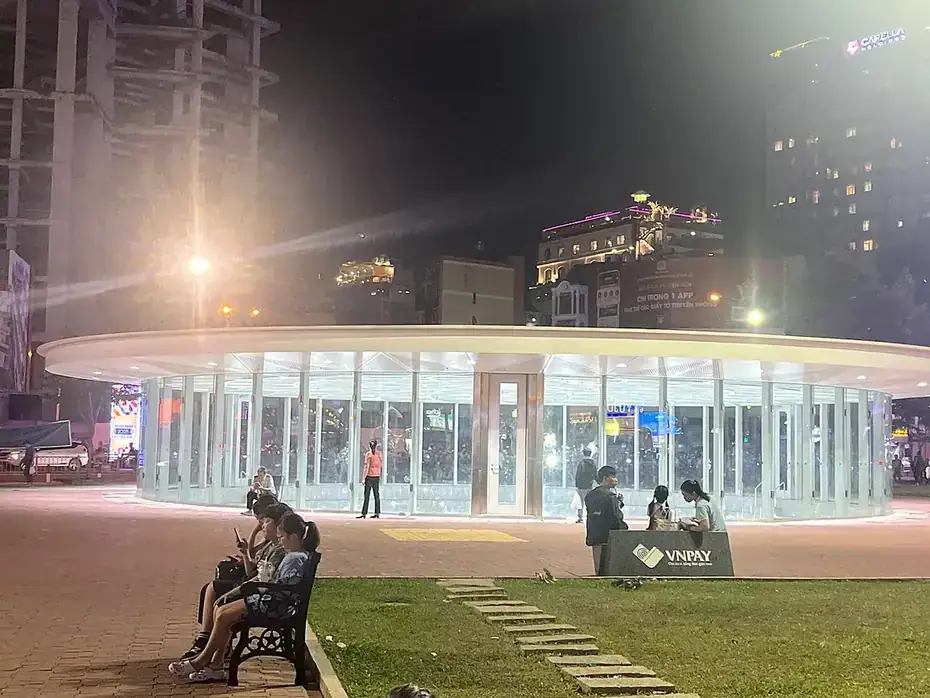
Find the correct station entrance
Search your closest Metro Line 1 station in maps or the HCMC Metro HURC app. Underground stations can have multiple street entrances. Follow the metro logos and station-name signs. At Ben Thanh, head down to the concourse with ticketing and information facilities before reaching the train platforms.
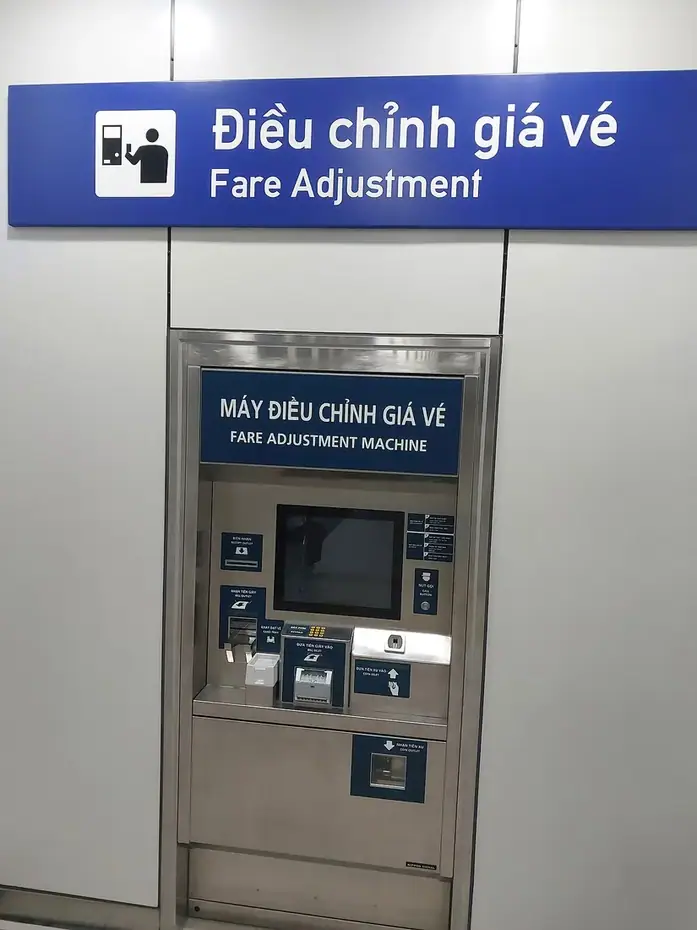
Choose a ticket or contactless payment method
Depending on the station and reader, you can use a supported contactless Visa, Mastercard or NAPAS card, a supported e-wallet QR method, or a ticket purchased through the HCMC Metro HURC app. Ticket machines and station staff can help when you need a cash-based option. Bank and mobile-wallet availability can vary; check the specific reader. Do not rely on buying a paper QR ticket at every station because this format has been withdrawn at selected stations.
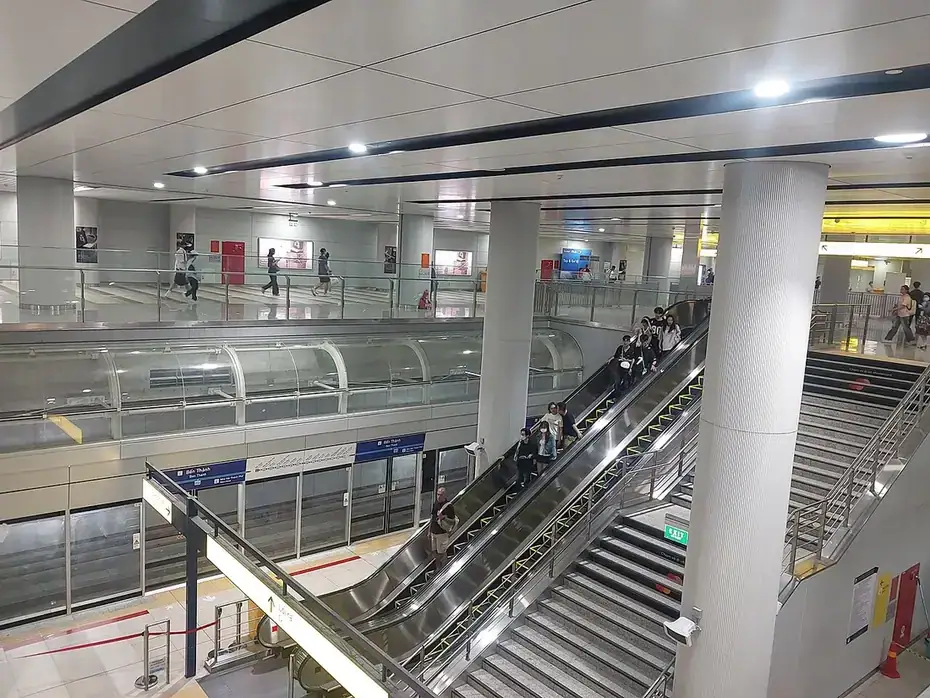
Tap or scan at the correct entry gate
Hold your supported card at the contactless reader, or show the valid ticket QR code to the scanner, until the gate confirms entry. One person uses one valid ticket or payment credential. If you pay by bank card, keep the same physical card or digital wallet credential ready when exiting; using a different card can cause a fare error. If the reader does not respond, ask a station attendant rather than trying multiple cards repeatedly.
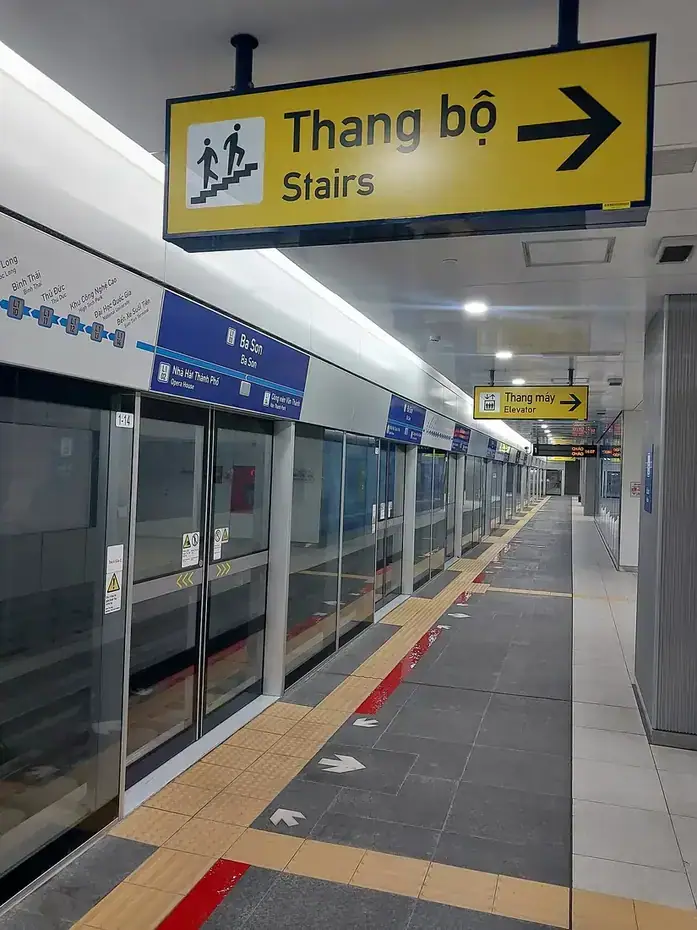
Choose the platform direction
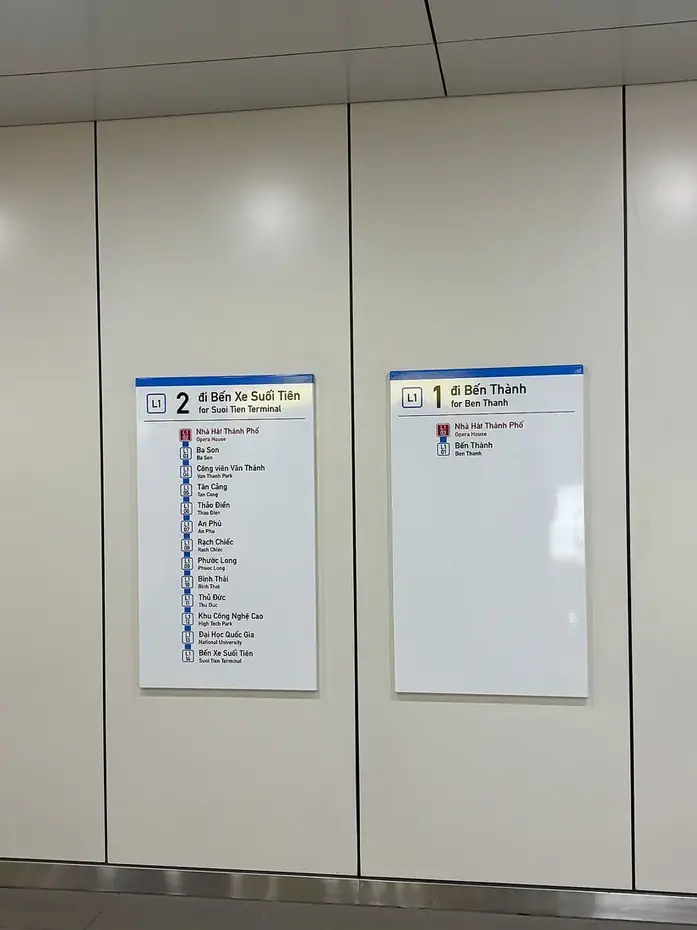
From Ben Thanh, Opera House or Ba Son towards Thao Dien or National University, follow signs showing Suoi Tien Terminal / Bến xe Suối Tiên. If returning from Thao Dien, An Phu or the eastern stations to downtown, follow Ben Thanh / Bến Thành. Read the destination on the platform's electronic signs, not just the station name over the stairs.
Board safely and follow the station announcements
Stand behind the safety line, let passengers exit first and enter only when the platform doors and train doors are open. Keep luggage close and give priority space to those who need it. Listen for station announcements and follow the onboard route display. Do not hold doors or block the aisle.
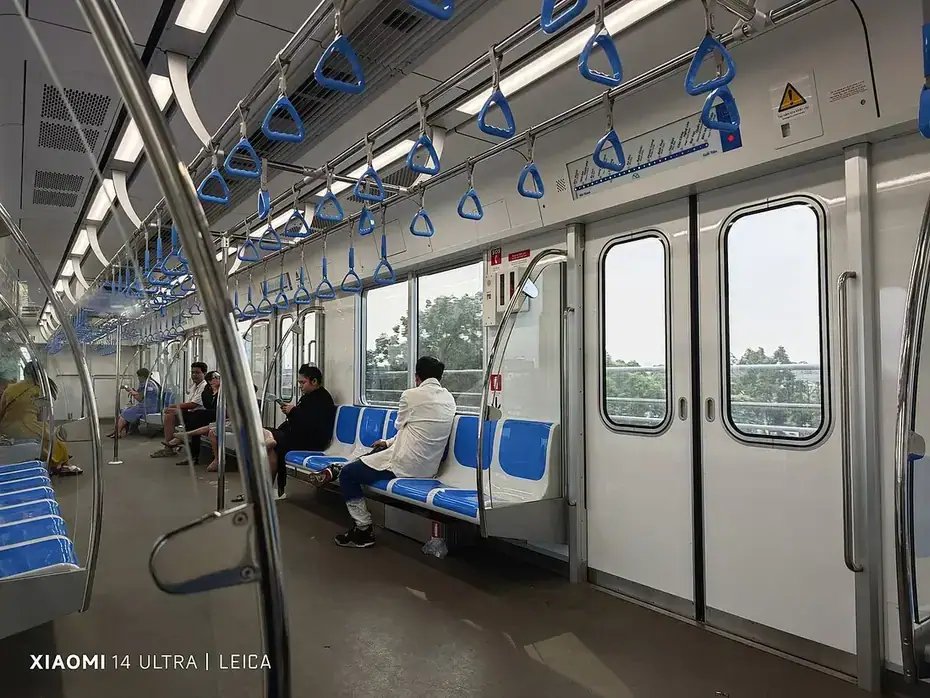
Exit at your station and make your onward connection
After leaving the train, follow Exit / Lối ra signs and use the same payment card or valid ticket as required by the gate. The closest station does not always mean your destination is directly outside it: for example, parts of Thao Dien and the Landmark 81 area may require a short onward ride. Use current map directions and avoid crossing busy highways except at designated crossings.
6. Best metro stops for tourists: where should you get off?
Ben Thanh (Station 1): markets and central Saigon
Choose Ben Thanh for the historic market area, local snacks, shopping streets and access to central visitor activities. Check the market's opening arrangements separately; the metro station and the market do not necessarily share hours.
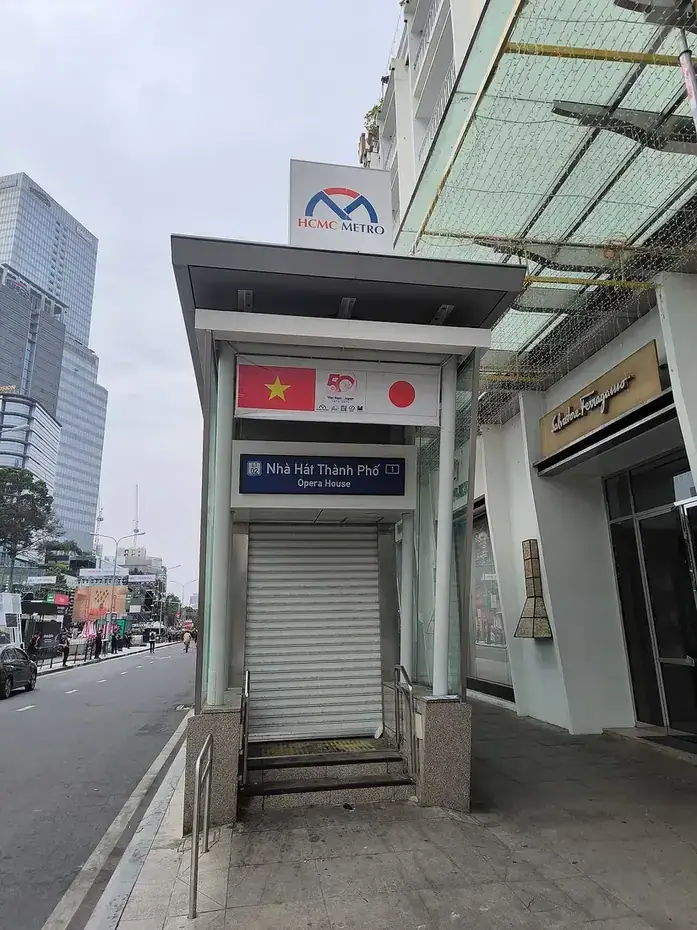
Opera House (Station 2): Dong Khoi and Nguyen Hue
This underground stop is useful for the Saigon Opera House, Dong Khoi shopping street and Nguyen Hue Walking Street. For locally inspired gifts, KOKONIC Dong Khoi is at 8 Dong Khoi, Grand Hotel Saigon; another KOKONIC location is on Level 3 of The Cafe Apartment, 42 Nguyen Hue. HCM Travel Guide is operated by KOKONIC, and these are identified as brand locations rather than an impartial ranking.
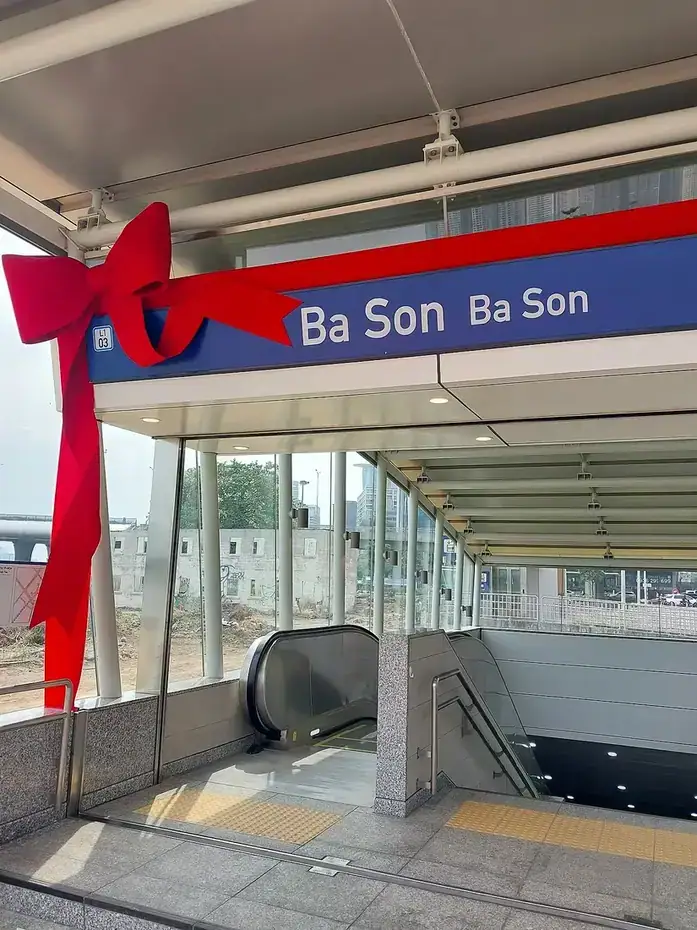
Ba Son (Station 3): a riverside break
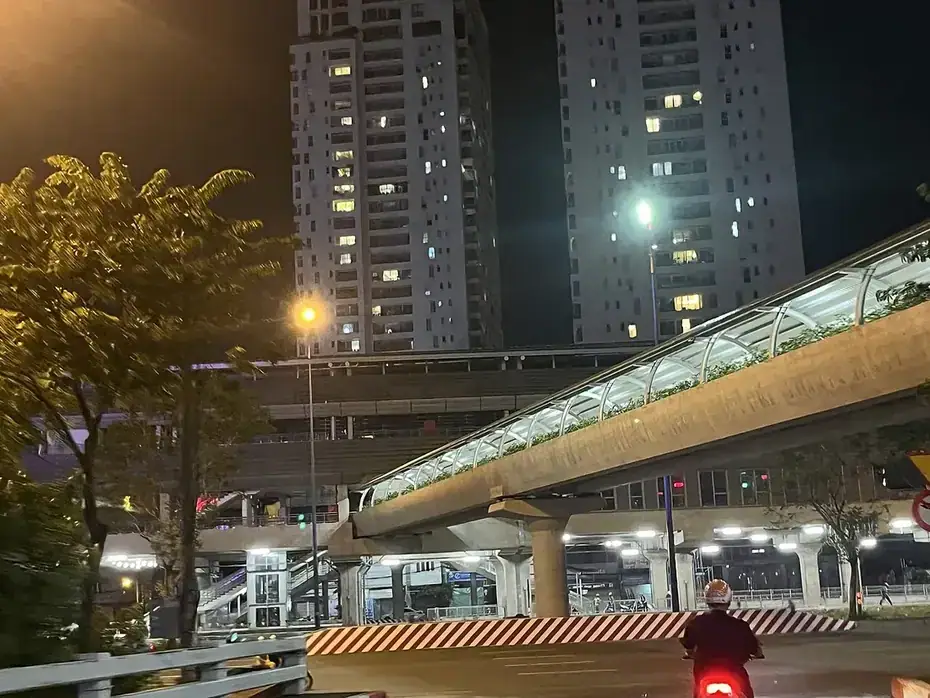
Use Ba Son to explore the Saigon River waterfront and surrounding new urban streets. Consult the map for the correct exit and safe crossing; the underground station has multiple access points.
Tan Cang (Station 5): towards Landmark 81
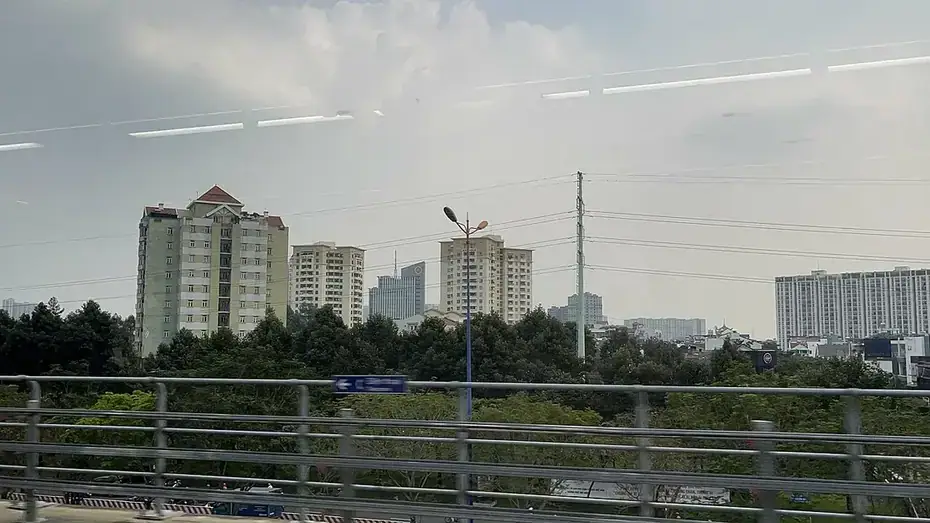
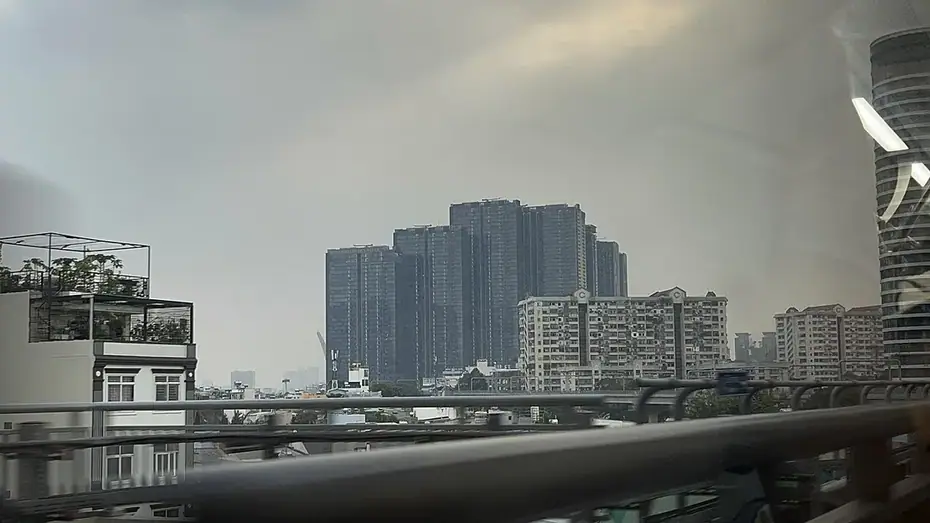
Tan Cang is a potential arrival point for visitors heading toward the Landmark 81 / Vinhomes Central Park area, but the landmark is not located directly on the platform. Plan the remaining distance using real-time maps and transport.
Thao Dien (Station 6): café culture and relaxed shopping
Thao Dien is a good option for cafés and speciality shopping beyond the central tourist streets. The KOKONIC Thao Dien store at 113Bis Xuan Thuy can be part of a shopping visit; check the onward route, as it is not directly outside the station. See our Thao Dien shopping guide.
An Phu (Station 7): shopping centre connections
An Phu serves an area with large retail destinations. Check which station exit and road crossing best fits the centre you are visiting.
National University (Station 13): Suoi Tien Theme Park
This is the stop to choose for Suoi Tien Cultural Theme Park. The park's own travel information points to National University station and the pedestrian bridge. The amusement park requires its own admission ticket; a metro pass does not include that admission.
Suoi Tien Terminal (Station 14): regional bus connections
The final stop is most useful for onward links to the New Eastern Bus Station area. Do not confuse it with the entrance to Suoi Tien Theme Park.
7. An easy half-day Metro Line 1 sightseeing itinerary
09:00 — Ben Thanh: Start at the market area, take photos from permitted public places and have a quick breakfast or coffee. Allow about 45–60 minutes.
10:00 — Opera House: Ride one stop to the Opera House and explore the surrounding streets. This is a natural point to see Dong Khoi and Nguyen Hue or browse Vietnamese souvenir shops. Allow 60–90 minutes.
11:30 — Ba Son: Ride to Ba Son for a look at the riverfront and a short break, depending on weather.
13:00 — Thao Dien: Take the eastbound train to Thao Dien, then use an appropriate short local transfer to visit a café or shop. Eat lunch before returning by the westbound train towards Ben Thanh.
Alternative full-day extension: Replace Thao Dien with National University station and visit Suoi Tien Theme Park. Check park hours and ticket costs separately. This is a flexible suggested itinerary—not guaranteed live travel times or a booked tour.
8. Helpful tips for first-time riders and international visitors
- Check the train direction: signs say Ben Thanh in one direction and Suoi Tien Terminal in the other.
- Keep your card handy: use the same payment credential when entering and exiting if paying by contactless bank card.
- Travelling as a group? each passenger needs a valid separate ticket or appropriate payment credential; ask staff about group payment rather than tapping one card for everybody.
- With suitcases or children? use lifts when appropriate, keep belongings close and follow staff instructions. Check the operator's current eligibility rules for concession fares.
- Need a folding bike? the operator has published size and packing rules; always check the latest conditions before boarding.
- For airport trips: Line 1 does not stop at Tan Son Nhat Airport. Plan a separate connection.
- For photography: do not block doors, escalators or other passengers. Observe posted safety rules.
- For last trains: special-event and weekend hours may change. Check the current operator schedule for your boarding station.
9. Frequently asked questions about Ho Chi Minh City Metro Line 1
Can foreign tourists use HCMC Metro Line 1?
Yes. Visitors can ride the line. Choose a supported contactless payment method or follow the operator's current instructions for purchasing tickets at stations or in the HCMC Metro HURC app.
How many stations are on Metro Line 1?
There are 14 stations: three underground stations and 11 elevated stations.
What is the price of a metro ride in Ho Chi Minh City?
The published single-ticket price ranges from 6,000–19,000 VND for cashless payment and 7,000–20,000 VND for cash purchases, depending on the journey. Verify the current fare before buying.
Which metro stop is closest to Ben Thanh Market?
Ben Thanh Station, at the western end of Metro Line 1.
Which metro station is best for Saigon Opera House?
Opera House / Nhà hát Thành phố Station is the natural stop for the opera house and the Dong Khoi area.
Which stop should I use for Suoi Tien Theme Park?
Use National University / Đại học Quốc gia Station and follow pedestrian-bridge signs, not Suoi Tien Terminal.
Does the metro go to Tan Son Nhat Airport?
No. Metro Line 1 does not stop at the airport; use another transport link.
Can I pay with a Visa or Mastercard?
Supported contactless Visa and Mastercard payments have been introduced at Metro Line 1 gates. Your card must support the relevant payment method, and reader availability or payment rules may change.
What if I cannot buy a paper QR ticket?
Some stations stopped selling paper QR tickets from November 2025. Use a supported alternative, such as contactless payment, the operator's app, available ticket machines or station assistance.
10. Official sources and update notes
This article was prepared for independent travellers and checked against current publicly available information on 5 November 2026. Because operating timetables, ticket rules and special schedules can change, check the relevant source on the day you travel.
- HCMC Metro HURC — operating company and station information
- Government portal — published Metro Line 1 fares and passes
- Ho Chi Minh City information — selected stations stopped paper QR ticket sales
- City press centre — VNeID ticketing update, October 2026
- Suoi Tien Theme Park — access via National University station
Photo credits and image licenses
The original route diagram on this page was designed for HCM Travel Guide. The real-world metro photographs come from Wikimedia Commons contributors under individual free licenses; the photographer, file page and license for each image are listed below. Photographs are illustrative and might depict earlier ticket equipment or station layouts. The site hosts compressed versions for faster loading.
Photo: HCMC Metro Line 1 Route at Opera House Station 1.jpg · XxxNMTxxx · CC0 (License details)
Photo: Ga Bến xe Suối Tiên (20168).jpg · Lý Kiến Quốc · CC BY-SA 4.0 (License details)
Photo: HCMC Metro No1 Ben Thanh Suoi Tien in Thao Dien, Thu Duc.jpg · HikariTenshi · CC BY 4.0 (License details)
Photo: Ben Thanh Station 241224 1.jpg · Xuanphuocle · CC0 (License details)
Photo: Fare adjustment machine in Ba Son metro station, HCMC metro.jpg · Felix Běhavý · CC BY 4.0 (License details)
Photo: Interior of the Bến Thành Station, HCMC metro, line 1.jpg · Felix Běhavý · CC BY 4.0 (License details)
Photo: Metro platform of the Ba Son Station, HCMC metro, line 1.jpg · Felix Běhavý · CC BY 4.0 (License details)
Photo: Bên trong tàu điện Tuyến Tàu Metro số 1.jpg · Taken by Miyako Fujimiya ( talk · contribs ) with Xiaomi 14 Ultra. · CC BY-SA 4.0 (License details)
Photo: Entrance to Ba Son metro station, HCMC metro.jpg · Felix Běhavý · CC BY 4.0 (License details)
Photo: Ga Thảo Điền 041224.jpg · Xuanphuocle · CC0 (License details)
Photo: 2023-12-10 Opera House metro station, Ho Chi Minh City (Ga Nhà hát Thành phố).jpg · 源義信 · CC BY-SA 4.0 (License details)
Photo: 11-01-2025 Line 1 Ho Chi Minh City metro for Ben Thanh Station 25.jpg · Xuanphuocle · CC0 (License details)
Photo: 11-01-2025 Line 1 Ho Chi Minh City metro for Suoi Tien Terminal Station 5.jpg · Xuanphuocle · CC0 (License details)
Photo: (VNM-Ho Chi Minh City) HCMC Metro Line 1 Hitachi Rolling Stock L1005 @ Van Thanh Park 2025-10-06.jpg · S5A-0043 · CC BY 4.0 (License details)
Explore more: 3 Days in Ho Chi Minh City, One-Day Saigon Shopping Route, KOKONIC store locations.