

Vietnam's coffee scene is a highlight for many travelers, and bringing home a bag of roasted coffee is a popular souvenir. But with so many names and styles, how do you pick? This guide covers seven KOKONIC roasted coffee options available in Saigon, explaining what each name generally means, how they differ, and who they might suit as a gift.
We are Travel Saigon, operated by KOKONIC, so we have a direct connection to these products. This article is editorial: we aim to inform, not to pressure a sale. Availability and prices change, so treat this as a starting point for your in-store exploration.
Why Vietnamese Coffee Makes a Great Souvenir
Vietnam is a major coffee producer, and its café culture is distinct. A bag of roasted coffee is lightweight, culturally relevant, and easy to carry (though always check customs rules). It is a gift that invites the recipient to slow down and brew a cup, connecting them to your travels.
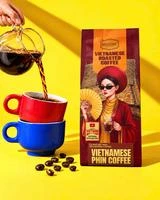
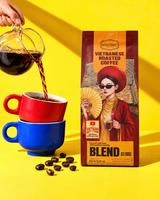
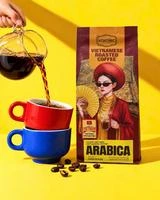
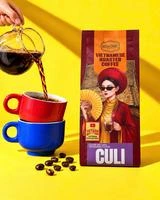
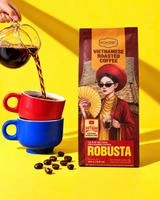
The seven KOKONIC packs share a consistent visual identity: a woman with sunglasses and red circular headwear on a bright yellow background, with a hand pouring coffee from a clear pitcher into a red cup stacked on a blue cup. Each is branded KOKONIC Vietnamese Roasted Coffee. The front labels show two unchecked checkboxes: 'NGUYÊN HẠT / BEANS' and 'RANG XAY / GROUND'. Since they are unchecked in the photos, we cannot confirm whether any specific pack contains whole beans or ground coffee. You will need to check the actual label in store. Also, the Arabica, Robusta, and Blend packs display '250 g / 8.81 oz'; the Luwak pack likely does too, but we do not assume the same for all others.
Below, we introduce each of the seven varieties, then offer a comparison table and practical buying advice.
1. KOKONIC RO-HONEY
'RO-HONEY' is a printed product name. It does not prove that honey was added to the coffee or that the beans underwent honey-process fermentation. The name may evoke sweetness, but the actual composition is unverified from the photo alone.
As a gift, this could appeal to someone curious about coffee names and willing to explore. It is a conversation starter. Without tasting notes we cannot describe its flavor. Consider it if the recipient enjoys trying novel coffee labels and you can check the package details together.
2. KOKONIC CULI
In Vietnamese coffee, 'CULI' often refers to peaberry beans—a natural mutation where a coffee cherry contains a single round bean instead of two flat ones. However, the specific roast or composition of this KOKONIC CULI pack is not verified. Peaberry is sometimes associated with a more uniform roast due to the bean shape, but we cannot claim that for this product.
For a gift, CULI might suit someone interested in coffee botany or rare bean types. It is a distinctive name that stands out on a shelf. Again, check the label for grind and weight.
3. KOKONIC VIETNAMESE PHIN COFFEE
'PHIN COFFEE' is named for the Vietnamese phin filter style—a small metal drip brewer. The name suggests it is intended for phin brewing, but whether the pack is specifically ground for a phin requires checking the actual label. Some phin coffees are ground, others are whole beans; the unchecked boxes mean we cannot assume.
A phin coffee gift is ideal for someone who already enjoys Vietnamese coffee or is willing to learn the brewing method. It pairs well with a phin filter, which can be bought separately. If you are choosing this, consider also gifting a phin for a complete experience. For brewing guidance, see our Vietnamese Phin Coffee Brewing Guide.
4. KOKONIC ARABICA
Arabica is a coffee species known for generally being more aromatic and softer in acidity compared to Robusta. However, roasting profiles vary widely, so the final cup can range from light and fruity to dark and chocolatey. This KOKONIC Arabica pack implies its category, but does not specify exact terroir or roast level.
As a gift, Arabica often appeals to drinkers who prefer a milder, more delicate cup. It is a safe choice for someone who drinks coffee regularly but avoids very strong brews. The 250 g / 8.81 oz size is stated on the pack.
5. KOKONIC ROBUSTA
Robusta is a coffee species typically stronger, bolder, and with higher caffeine than Arabica. It is the backbone of many Vietnamese coffee blends, often providing the distinctive strong flavor associated with cà phê sữa đá (iced coffee with condensed milk). Roasting can soften its intensity, but it generally remains more powerful than Arabica.
This KOKONIC Robusta pack is a good gift for someone who loves intense coffee, perhaps with milk or sugar. It is also a common choice for those who grew up with Vietnamese coffee. The displayed weight is 250 g / 8.81 oz.
6. KOKONIC LUWAK
'LUWAK' often denotes civet-style coffee, historically produced from beans that have passed through a civet. However, we cannot verify the provenance or ethical practices of this product from the photo. It should not be implied that this is confirmed wild or cage-free. The name is a category indicator, not a certification.
Luwak coffee is often considered a novelty or luxury gift due to its unusual story. It may suit someone who enjoys exotic food stories, but be transparent that the production method is unverified. Check the label for weight and grind; the 250 g size is likely but not assumed.
7. KOKONIC BLEND (40% Robusta, 60% Arabica)
The Blend pack explicitly shows 40% Robusta and 60% Arabica. This ratio is visible on the package. Blending is common in Vietnam to balance Robusta's strength with Arabica's aroma. The result can be a versatile coffee that works in various brewers.
As a gift, this is a thoughtful choice for someone who wants a balanced cup, not too strong nor too mild. It is also a good introduction to Vietnamese coffee for beginners. The pack states 250 g / 8.81 oz.
Comparison Table: Matching Coffee to the Drinker
| Coffee Name | General Category | Likely Best For | Notes |
|---|---|---|---|
| RO-HONEY | Product name (honey reference) | Curious drinkers, novelty seekers | Not verified as honey-processed |
| CULI | Often peaberry beans | Botany enthusiasts, rare bean fans | Specific roast/composition unverified |
| VIETNAMESE PHIN | Named for phin filter style | Phin brewers, Vietnamese coffee lovers | Grind type requires label check |
| ARABICA | Arabica species | Those preferring milder, aromatic cup | Terroir and roast not specified |
| ROBUSTA | Robusta species | Fans of strong, bold coffee | Often used in Vietnamese blends |
| LUWAK | Civet-style coffee reference | Exotic gift seekers | Provenance and ethics unverified |
| BLEND | 40% Robusta, 60% Arabica | Balanced cup seekers, beginners | Ratio is explicit on pack |
How to Choose: A Buying Checklist for Tourists
Before you buy, consider these points:
- Recipient's taste: Do they prefer strong coffee or mild? Robusta for strong, Arabica for mild, Blend for balanced.
- Brewing equipment: If they have a phin, consider the Phin Coffee. If they use a drip machine, any grind works, but check the label for grind type.
- Gift purpose: For a colleague, a safe choice like Arabica or Blend is often appreciated. For a close friend who loves coffee, Luwak or Culi can be a fun surprise.
- Customs rules: Many countries restrict importing food products, including coffee. Check your destination's customs and quarantine regulations. Do not assume coffee is allowed.
- Packaging details: Always check the actual label for weight, grind (beans or ground), and any certifications. The photos show unchecked boxes, so in-store inspection is necessary.
Brewing a Phin: A Typical Approach
If you gift a Phin Coffee, the recipient will need a phin filter. Here is a typical brewing method:
- Equipment: Phin filter, coffee (medium-coarse grind is common), hot water (about 90-95°C), cup, condensed milk (optional).
- Setup: Place the phin on a cup. Add 2-3 teaspoons of coffee to the chamber. Shake gently to level.
- Tamp: Place the press on top and press lightly. Do not over-compact.
- Bloom: Pour a small amount of hot water to wet the grounds. Wait 30 seconds.
- Brew: Fill the chamber with hot water. Cover with the lid. Let it drip through, typically 4-6 minutes.
- Enjoy: Drink black or add condensed milk. Adjust coffee amount and grind for strength.
Variations: Some prefer a finer grind for slower drip; others use a coarser grind for faster flow. Experiment to find what works.
Where to Find KOKONIC Coffee in Saigon
KOKONIC has four stores in Ho Chi Minh City:
- 8 Đồng Khởi (Grand Hotel Saigon)
- Level 3, 42 Nguyễn Huệ (The Cafe Apartment)
- 113Bis Xuân Thủy (Thảo Điền)
- 116 Hồ Tùng Mậu (central HCMC)
Availability and prices should be checked at the store. We do not guarantee stock or promotions. For store details, see our Stores page.
FAQs
Can I bring these coffees home? What about customs?
Customs and quarantine rules vary by country. Many nations restrict or prohibit importing food products, including coffee, to protect agriculture. Check your destination's official customs website before travel. Do not assume coffee is allowed. Declare if required.
What is the difference between Arabica and Robusta?
Arabica is generally more aromatic and softer, while Robusta is stronger and bolder with higher caffeine. Roasting can change these characteristics. For more, see our Arabica vs Robusta guide.
Which coffee is best for a gift?
It depends on the recipient. Arabica or Blend are safe choices for most coffee drinkers. Robusta suits those who like strong coffee. Luwak or Culi are for adventurous friends. Consider how they brew coffee and their taste preferences.
Are these coffees whole beans or ground?
The photos show unchecked checkboxes for 'NGUYÊN HẠT / BEANS' and 'RANG XAY / GROUND'. We cannot confirm from the images. You must check the actual label in store to see which you are buying.
Final Thoughts
Choosing a coffee gift in Saigon can be a delightful part of your trip. The seven KOKONIC varieties offer a range of options, from everyday blends to intriguing names. Use this guide to ask the right questions in store, and enjoy the process. For more on Vietnamese coffee gifts, see our Vietnamese Coffee Souvenir Gifts guide.
Safe travels, and happy brewing.