
Start with the kind of information a label gives
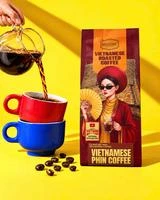
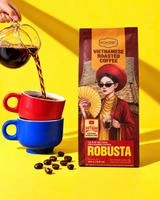
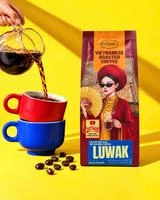
The seven KOKONIC packages shown together are labeled RO-HONEY, CULI, VIETNAMESE PHIN COFFEE, ARABICA, ROBUSTA, LUWAK and BLEND. These words are not seven equivalent bean varieties. Some name broad coffee species or a blend; others may refer to a local category, a brewing method or a term that needs more information to interpret.
A useful habit is to ask: Is this word about the plant, the post-harvest process, the roast, the grind, or the brewing method? One package name may not answer every question. For these products, don’t infer a specific taste, origin, certification or preparation format from the label alone.
Arabica and Robusta: two broad coffee categories
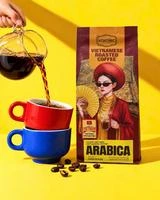
Arabica and Robusta are commonly used names for two different coffee species. As general tendencies, Arabica often has more perceived nuance and acidity, while Robusta tends to have more body and bitterness. These are broad comparisons, not guarantees: growing conditions, processing, roasting, freshness, grind and brewing all influence what ends up in the cup.
Those tendencies can help you choose a starting point. If you usually enjoy a cup with layered impressions or noticeable brightness, Arabica may interest you. If you prefer a fuller-bodied, more bitter profile, you may want to explore Robusta. But the ARABICA and ROBUSTA package names don’t, by themselves, verify a particular farm, roast level or flavor note. Tasting is the best way to find your preference.
What KOKONIC’s Blend label tells you
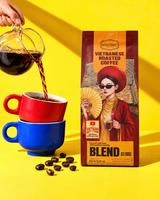
KOKONIC’s BLEND is explicitly labeled 40% Robusta and 60% Arabica. That stated ratio is a useful, concrete distinction: the blend combines the two categories in those proportions. It does not promise a particular flavor, intensity or brewing result. The general tendencies of each coffee type can be a starting point for thinking about the blend, not a tasting note for this specific package.
When comparing a blend with a single-category label, check what is actually stated. A percentage tells you the stated composition; it does not disclose details such as source, roast profile or processing unless those are separately provided. For a wider look at the seven labels, see seven Vietnamese roasted coffee labels explained.
Culi, RO-HONEY and Luwak: labels that need context
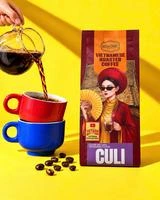
CULI is a local term often associated with peaberry coffee. The word on a package alone, however, does not verify the beans’ source or provide a full account of what is inside. If origin or detailed bean information matters to you, look for explicit supporting information rather than treating the name as proof.
RO-HONEY should be read as the printed label—not as automatic evidence of honey processing or honey flavor. The name alone does not establish a processing method or a taste promise. Ask the seller or consult accompanying product information if you need clarification.
LUWAK is also not proof by itself. A label alone cannot verify civet origin, certification, treatment or ethical practices. If these details matter to your purchase, seek clear, verifiable information before drawing conclusions. No package name substitutes for evidence about sourcing or handling.
Phin is a brewing method, not a bean variety
A phin is a Vietnamese coffee brewing device and method. So VIETNAMESE PHIN COFFEE points to a brewing association, not a third coffee species alongside Arabica and Robusta. Coffee used with a phin can still be described separately by its bean category, blend, roast or grind—when that information is provided.
The label alone does not establish whether the package contains ground coffee or whole beans. Don’t rely on an unchecked or unclear package mark to decide. Confirm the format with the seller or product information before buying if it matters for your equipment. For a step-by-step overview, see our Vietnamese phin brewing guide.
A coffee-lover’s comparison table
| Label or term | What it generally describes | What not to assume from the word alone |
|---|---|---|
| Arabica | A coffee species/category | A precise flavor, origin or roast |
| Robusta | A coffee species/category | A precise bitterness level or strength |
| KOKONIC Blend | A blend labeled 40% Robusta, 60% Arabica | A guaranteed flavor or brewing outcome |
| Culi | A local term often associated with peaberry | Verified source or full bean details |
| RO-HONEY | The printed product name | Honey processing or honey flavor |
| Luwak | The printed product name | Civet origin, certification, treatment or ethics |
| Vietnamese phin coffee | A brewing-method association | Bean variety, grind or package format |
Choose a gift by the recipient, not by the fanciest word
For someone who likes comparing coffees, ARABICA and ROBUSTA labels can make a simple side-by-side starting point; the KOKONIC Blend adds a clearly stated 40/60 composition to discuss. For a friend curious about Vietnamese brewing, VIETNAMESE PHIN COFFEE is a natural conversation starter—but confirm whether the format suits their setup. CULI, RO-HONEY and LUWAK can prompt questions about terminology, so they are best chosen with care rather than with assumptions about origin, processing or ethics.
Gift checklist
- Check the exact label and stated blend percentage.
- Confirm whole-bean or ground format if the recipient needs a particular one.
- Ask about preparation equipment; a phin is only one brewing option.
- For claims about sourcing, processing or certification, look for explicit supporting information.
- If you’re unsure of someone’s taste, present broad category tendencies as possibilities—not promises.
Travel Saigon by KOKONIC has stores at 8 Đồng Khởi, Grand Hotel Saigon; Level 3, 42 Nguyễn Huệ Cafe Apartment; 113Bis Xuân Thủy, Thảo Điền; and 116 Hồ Tùng Mậu. Check store information for visit details. This guide doesn’t imply availability of any particular package at any location.
Four quick questions
Is Arabica always less bitter than Robusta?
Not always. Arabica is often described as more nuanced or acidic and Robusta as fuller-bodied or more bitter, but these are general tendencies. The finished cup depends on more than the species name.
What does 40% Robusta and 60% Arabica mean?
That is the composition stated for KOKONIC’s BLEND. It identifies the proportions printed on the label, not a guaranteed taste or a complete account of sourcing and roast.
Does RO-HONEY mean honey-processed coffee?
Not on the label alone. The name does not verify honey processing or honey flavor. Seek further product information if the distinction matters.
Does Vietnamese phin coffee mean the package is ground?
No. Phin refers to a brewing method, not whether the coffee is ground or whole bean. Confirm the package format before purchase if needed.