1. What bean-to-bar means at Marou
Marou was founded in 2011 by Samuel Maruta and Vincent Mourou. The company describes itself as Vietnam’s first bean-to-bar chocolate producer. In broad terms, bean-to-bar means making chocolate from cacao beans rather than starting with ready-made chocolate as the main ingredient. The maker has a role in transforming the beans into the finished bar, including decisions about processing and recipe.
That phrase describes an approach to production, not a guarantee that every bar tastes the same—or that one bar is automatically better than another. Marou’s official chocolate-bar catalogue is useful for checking current product details; packaging and recipes are the best references for the bar in your hand.
2. “Single origin” means a province, not a farm
For Marou’s single-origin bars, the origin refers to cacao from one Vietnamese province. It does not, by itself, mean cacao from one named farm, one plot or one harvest. The label narrows the geographical story, but it is not a complete traceability statement.
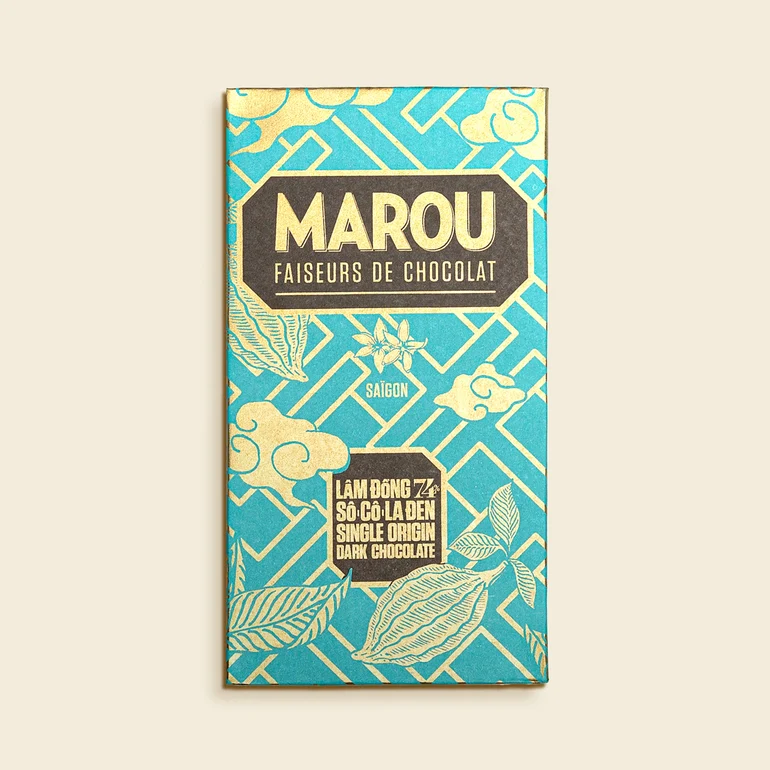
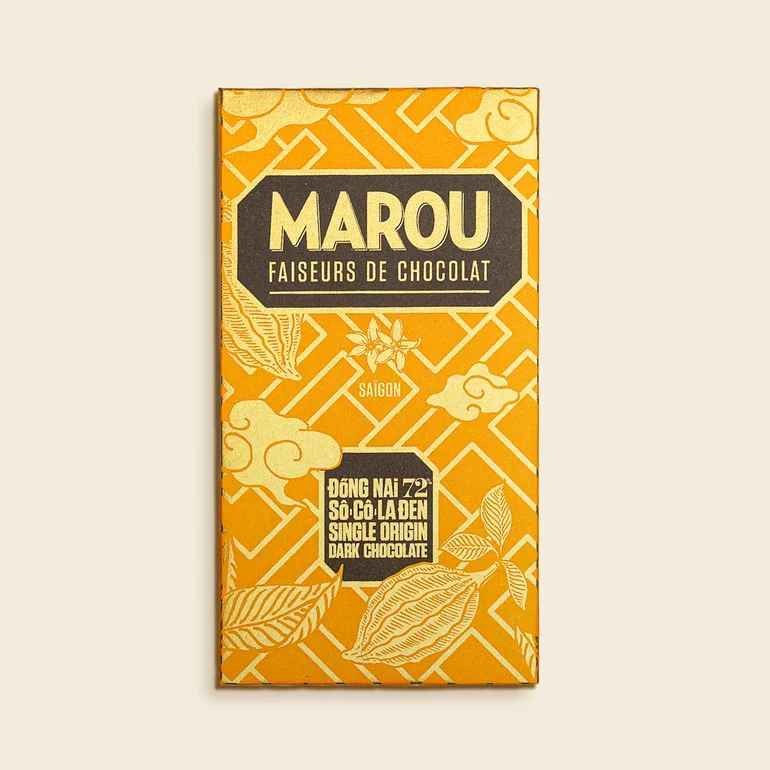
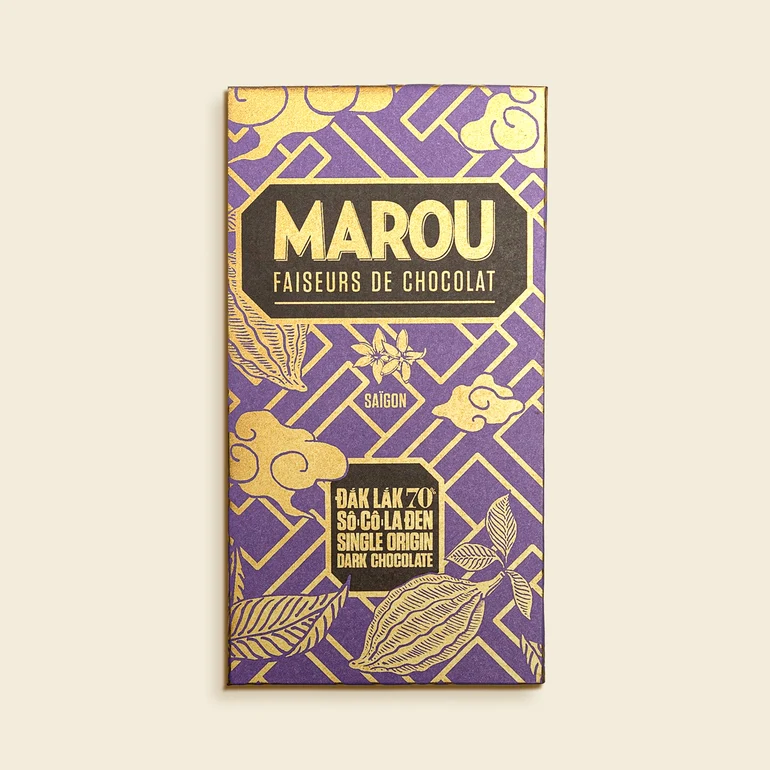
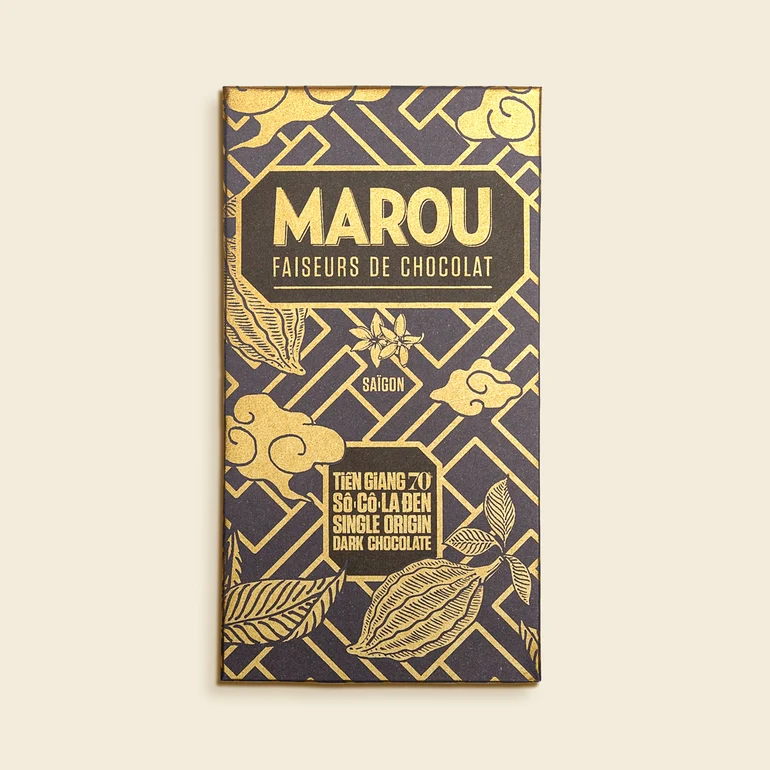
Marou identifies six cacao-origin provinces: Đắk Lắk, Lâm Đồng, Đồng Nai, Bà Rịa, Tiền Giang and Bến Tre. The bars discussed here show five of those provinces; Bà Rịa and Bến Tre are part of the company’s stated sourcing geography, but they are not represented by single-origin bars in the 17 photographed packages for this guide.
3. A province is a starting point, not a tasting note
A province name can help you compare chocolates with different stated origins, but it should not be treated as a flavour description. The evidence available for the bars below confirms their labels and percentages, not detailed tasting notes for each one. So this guide does not assign them invented fruit, floral, nutty or earthy flavours.
The origin is still meaningful: it connects a bar to a place in Vietnam and gives you a question to explore while tasting. But a province is not a promise that every cacao bean from that area tastes alike. Beans, harvest conditions and chocolate-making choices can all matter. Think of the label as a helpful regional signpost rather than a complete sensory verdict.
4. Cacao percentage and origin answer different questions
A cacao percentage tells you about the proportion of cacao ingredients in a product; it does not identify where those ingredients grew. A province label tells you the stated origin, not how much cacao is in the recipe. That is why “Lâm Đồng 74%” communicates two separate pieces of information.
Percentage is not a bitterness score or a quality ranking. A higher number does not automatically mean a bar will taste more bitter, more complex or more authentic. The recipe and the way the cacao is processed—including roasting—also shape the result. White chocolate needs special care in this comparison: Marou’s Vietnamese Vanilla White 44% is made with cacao butter, so its 44% should not be read as 44% cocoa solids or compared directly with a 44% dark bar.
5. Six bars to use as a learning flight
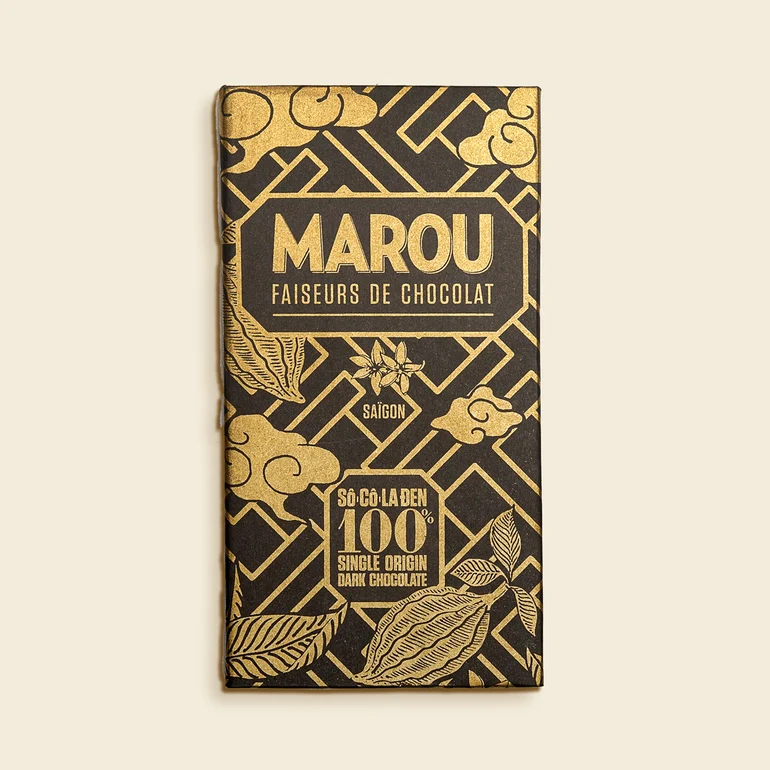
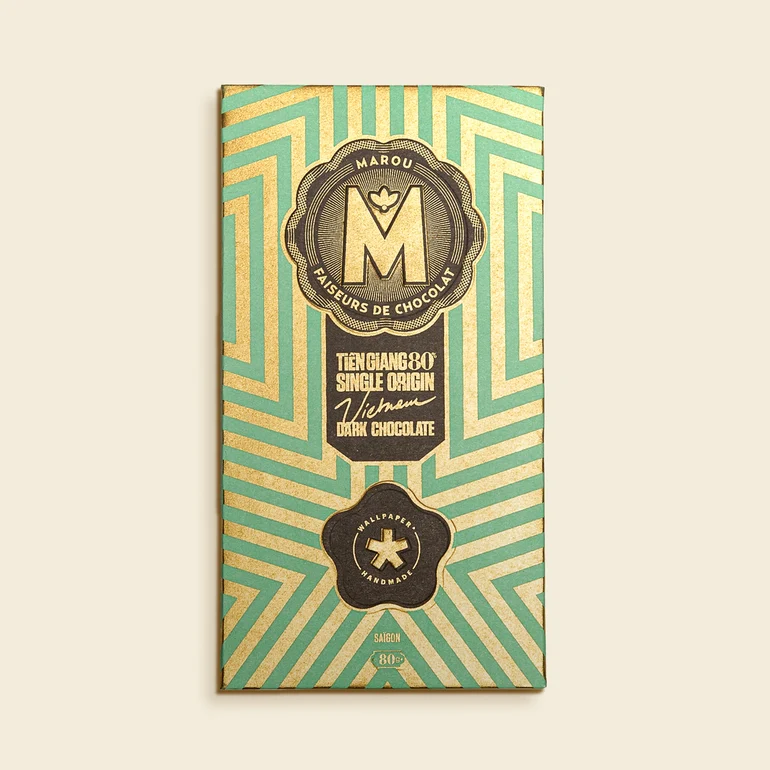
The photographed selection offers a useful way to compare labels without pretending that the bars form a ranking. Start with two bars that share an origin but differ in percentage: Tiền Giang 70% and Wallpaper* Tiền Giang 80%. Then compare the 70% Đắk Lắk bar with the 72% Đồng Nai bar, and set both beside Lâm Đồng 74%. Finally, use Vietnam 100% as a different percentage point of reference; it is a 60g bar and is not labelled with just one of the named provinces.
As you taste, first read each wrapper. Note origin, percentage, product name and any official description. Break off small pieces, let them begin to soften in your mouth, and give yourself a pause between bars. Water can help reset your palate. Record what you actually notice rather than trying to match a pre-written flavour list. A tasting flight is most useful as a personal comparison, not a contest to find a “best” province.
6. Quick comparison of the featured labels
| Bar | What the label tells you | Useful comparison |
|---|---|---|
| Lâm Đồng 74%, 80g | Single-origin dark chocolate; Lâm Đồng province | A mid-to-high percentage reference in this group |
| Đồng Nai 72%, 80g | Single-origin dark chocolate; Đồng Nai province | Compare with another province near the same percentage |
| Đắk Lắk 70%, 80g | Single-origin dark chocolate; Đắk Lắk province | A 70% point for a province-to-province tasting |
| Tiền Giang 70%, 80g | Single-origin dark chocolate; Tiền Giang province | Compare directly with the 80% Tiền Giang bar |
| Wallpaper* Tiền Giang 80%, 80g | Dark chocolate; Tiền Giang origin | Same named province as the 70% bar, different percentage and product |
| Vietnam 100%, 60g | 100% dark chocolate; country-level name | A different percentage reference, not a single-province bar |
Marou’s official description for Wallpaper* Tiền Giang 80% mentions spice and honey notes. That is a tasting description, not confirmation that honey is an ingredient. Check the product page and package for current information.
7. How to taste without letting the number decide for you
Try the bars in a considered order: begin with the lower-percentage bars, move to the higher-percentage options, and leave Vietnam 100% until you have a baseline. This is a practical tasting sequence, not a rule; personal preference and the recipe can change how a bar comes across. Keep portions small, and avoid sampling several bars immediately after strongly flavoured food or coffee.
For each piece, ask three simple questions: What does the aroma suggest before tasting? How does the texture change as it melts? What impressions remain after swallowing? You may find differences, similarities or no clear preference—and all are useful observations. Avoid assuming that a percentage predicts sweetness or bitterness precisely, or that a province name dictates a particular flavour.
8. From cacao bean to bar: the broad outline
Bean-to-bar chocolate generally passes through several stages: cacao is harvested and fermented, then dried and prepared for processing. The beans are roasted, cracked and separated from their shells. The cacao pieces are ground into a paste; makers then refine and conch the chocolate, formulate it with other ingredients where the recipe calls for them, temper it and shape it into bars.
This is a general explanation of chocolate-making, not a claim about the exact method or timing used for every Marou product. Each stage can influence the finished chocolate, which is one reason that origin and percentage alone cannot fully predict flavour. For product-specific ingredients or allergen information, use the official product listing and the physical label rather than assumptions based on a bar’s name.
9. Choosing a bar as a Vietnam souvenir
For someone who enjoys comparing chocolate, a small flight of different province labels can make a more engaging gift than choosing by percentage alone. Pairing Tiền Giang 70% and 80% invites a comparison within one stated origin; including Đắk Lắk, Đồng Nai or Lâm Đồng shifts the focus to different provincial names. Vietnam 100% offers a distinct percentage reference for a recipient who is curious about an especially cacao-forward style, but do not assume it will suit everyone.
If the recipient prefers a broader introduction, consider combining a single-origin bar with another style from the photographed range. Travel Saigon has separate guides to Marou’s chocolate-bar gift selection, phở-spice, kumquat, ginger and pepper bars and milk, white and coffee chocolate. Check ingredient and allergen details before buying for someone with dietary restrictions.
10. Buying in Saigon and carrying chocolate home
Travel Saigon is a KOKONIC-operated retailer guide. KOKONIC offers Marou selections, but variants and stock can differ by store; check with the location before making a special trip. These are KOKONIC stores, not Maison Marou outlets: Cafe Apartment, Level 3, 42 Nguyễn Huệ; 8 Đồng Khởi (Grand Hotel Saigon); 113Bis Xuân Thủy (Thảo Điền); and 116 Hồ Tùng Mậu. See the current English store guide or Chinese store guide, and our practical guide to where to buy Marou chocolate in Ho Chi Minh City.
For travel, keep bars in their original packaging and away from direct sun, hot car interiors and other heat. Follow the storage guidance on the specific product; Marou product pages commonly advise a cool, dry place around 18–25°C, but the package is the reference for the item you purchase. If you are planning a tasting or want more advice on percentages and packing, see cacao percentage, gifting and travel-storage tips. Check your airline and destination’s applicable rules yourself; no chocolate gift guarantees customs clearance.
11. Frequently asked questions
Is a single-origin Marou bar from one farm?
Not according to the meaning used here. Single origin refers to cacao from one province, not necessarily one farm, plot or harvest.
Does 80% mean a bar is more bitter than 70%?
Not necessarily. Percentage is not a direct bitterness score. Recipe and processing also influence taste, so compare the actual bars rather than relying on the number alone.
Is Wallpaper* Tiền Giang 80% made with honey?
Marou’s official taste description mentions honey notes. A tasting note does not establish that honey is an ingredient; check the official ingredient listing and package for the current recipe.
Where can I check which Marou bars are available in Saigon?
Check the KOKONIC store guide and contact the chosen location about the specific bar. Selection and stock may differ between stores. You can also consult Marou’s official chocolate-bar catalogue for product information.