Marou’s bars make a tempting souvenir, but choosing by the biggest percentage alone can lead to the wrong gift. A 44% white bar is not equivalent to a 44% dark bar; coffee, milk and spices change the experience; and tropical heat may matter more than the number on the wrapper. Use cacao percentage as one clue among several, then plan for the journey.
What a cacao percentage tells you—and what it does not
On dark and milk chocolate, the percentage generally indicates the proportion of cacao ingredients in the bar. It does not tell you exactly how sweet, bitter, fruity or intense the chocolate will taste. Cacao origin, recipe, processing and added ingredients all shape the result. Two bars at the same percentage can taste quite different, and a higher number is not a reliable promise of a stronger flavor.
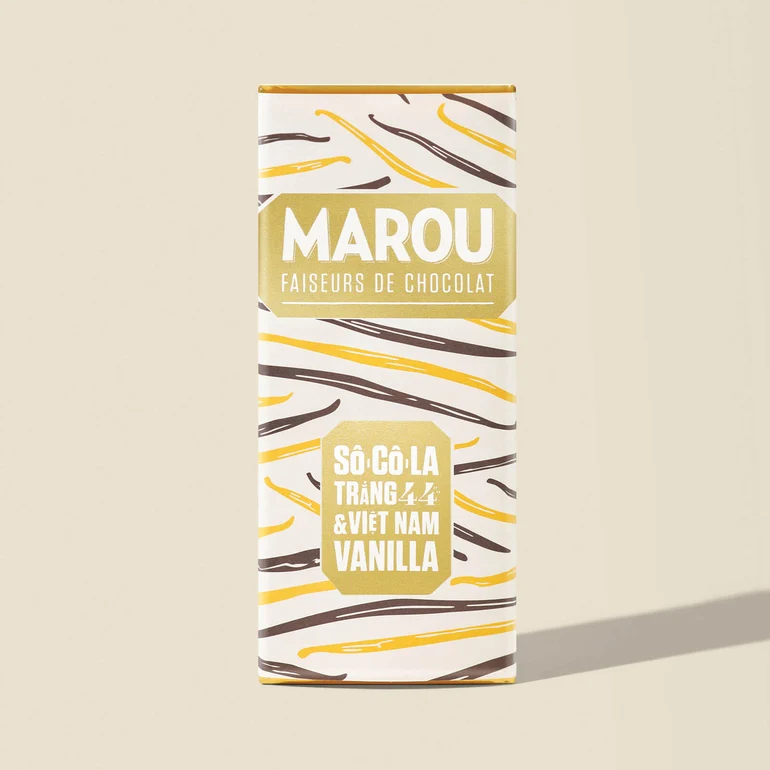
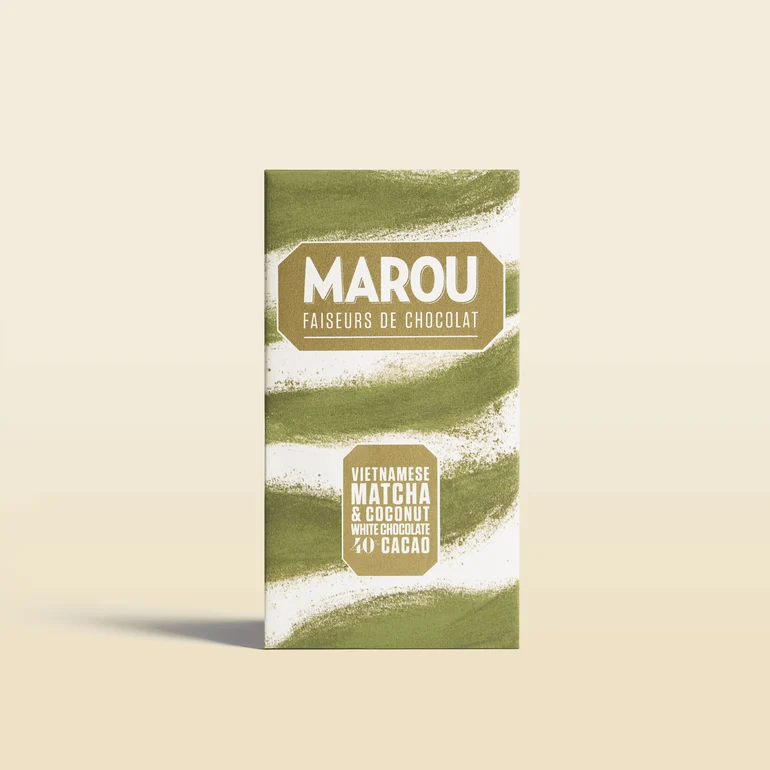
White chocolate needs a separate explanation. Marou’s Vietnamese Matcha & Coconut White 40% uses cacao butter; the 40% is not a measure of dark cacao solids. The Vietnamese Vanilla White 44% is also white chocolate made with cacao butter and vanilla bean. So do not compare either white bar directly with a dark bar bearing a similar number.
Think of percentages as a recipe clue, not a quality score, health claim or sweetness guarantee. For more on Marou’s provincial cacao origins, see our single-origin Vietnamese cacao guide.
A practical guide to Marou’s percentages
The following examples are selections featured by KOKONIC; exact variants and stock can differ by store, so check before making a special trip. Flavor descriptions below are cautious suggestions based on the bar names or Marou’s own descriptions, not a guarantee of what every palate will notice.
| Percentage | Example bar | A useful way to think about it |
|---|---|---|
| 40% white | Matcha & Coconut | White chocolate with cacao butter, matcha and coconut; milk and coconut allergens are listed. |
| 44% white | Vietnamese Vanilla | Cacao butter and vanilla bean with milk; a different style from 44% dark chocolate. A 24g mini is also shown in the selection. |
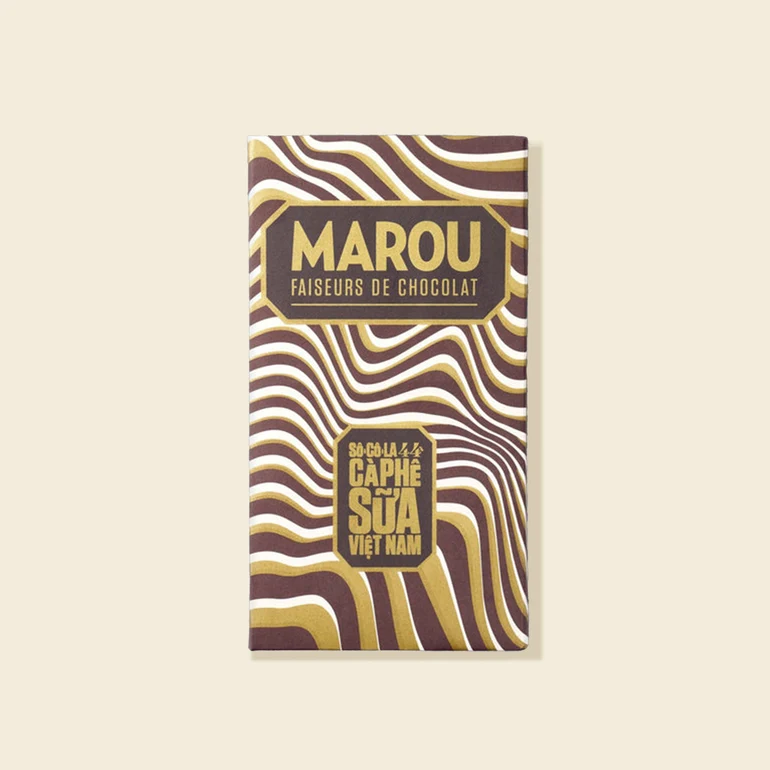
| 44% | Ca Phe Sua | Coffee-and-milk direction; the recipe lists coffee and milk. |
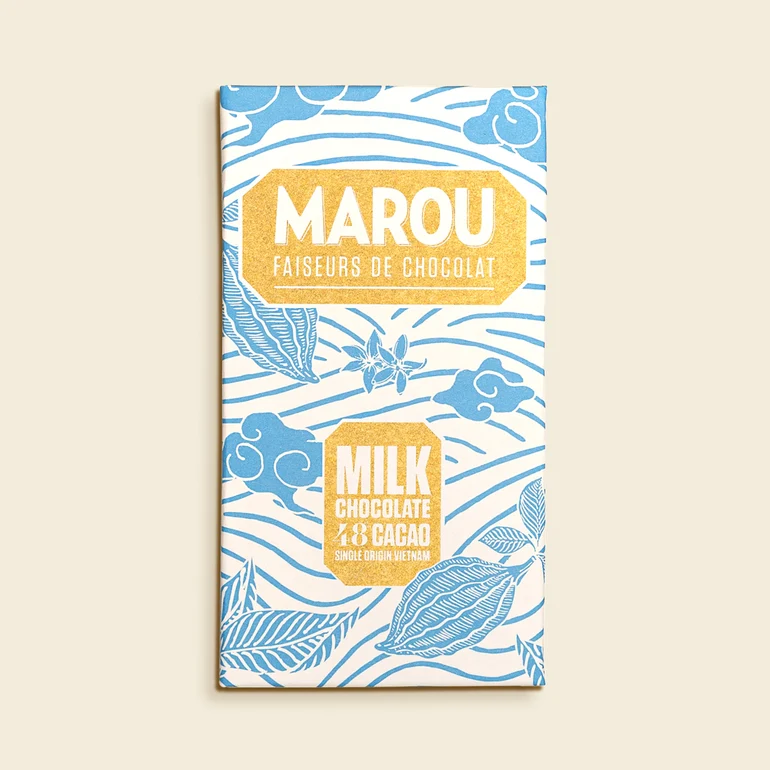
| 48% | Dark Milk Chocolate | A milk-chocolate option; contains milk. |
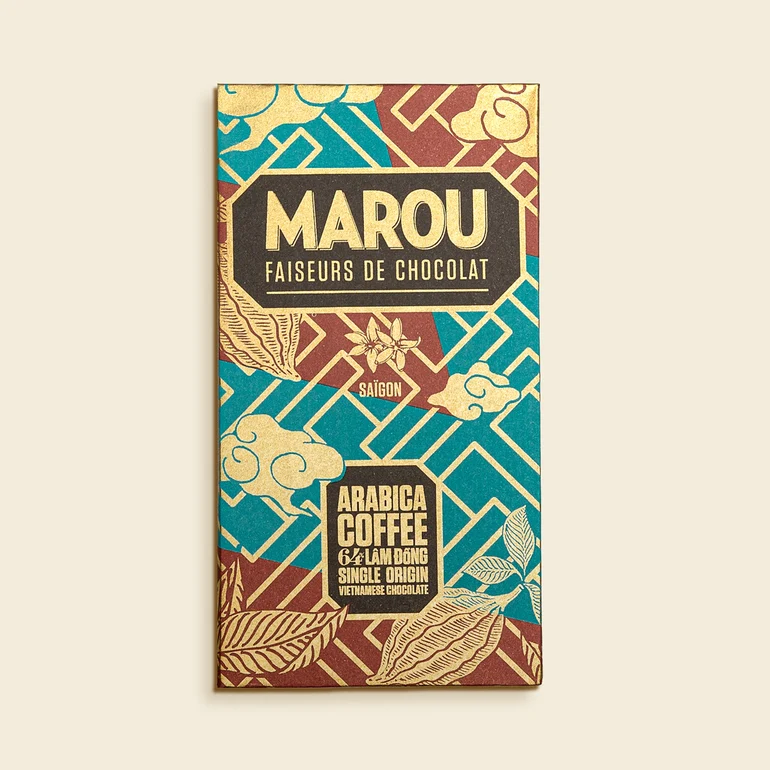
| 64% | Arabica Coffee Lam Dong | Lam Dong cacao with coffee beans in the recipe. |
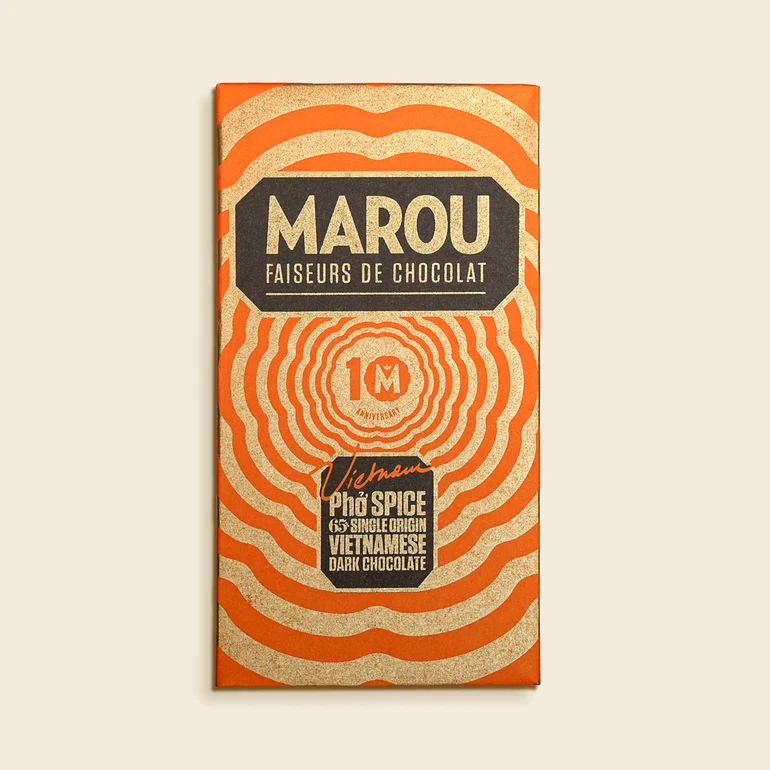
| 65% | Pho Spices | Dark chocolate inspired by phở spices: coriander, green cardamom, cinnamon, star anise and cloves. |
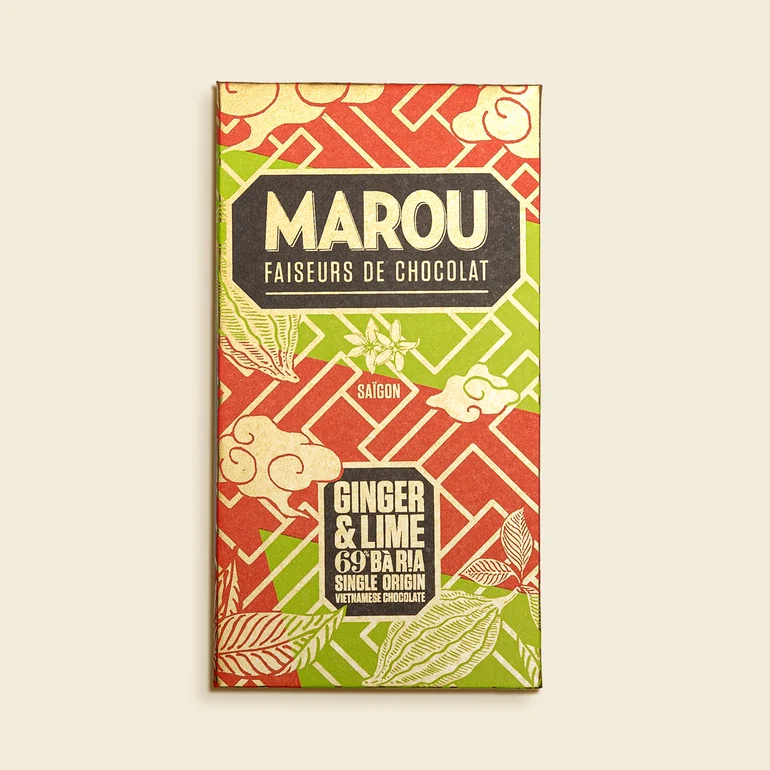
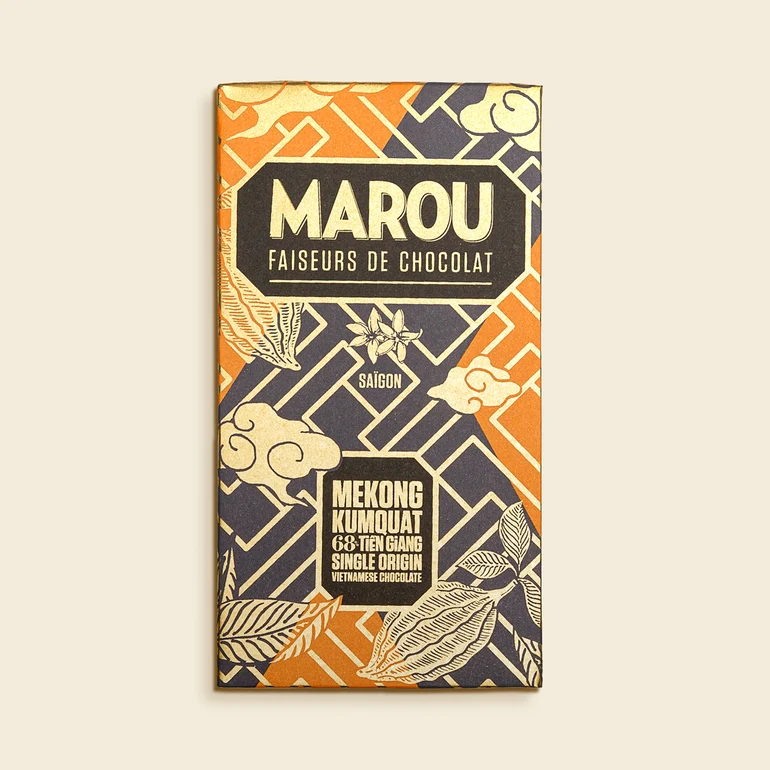
| 66–69% | Pepper & Pinch of Salt; Kumquat; Ginger & Lime; Mint & Orange | Flavor additions matter as much as the percentage. These are Dak Lak 66%, Tien Giang 68%, Ba Ria 69% and Dong Nai 68%, respectively. |
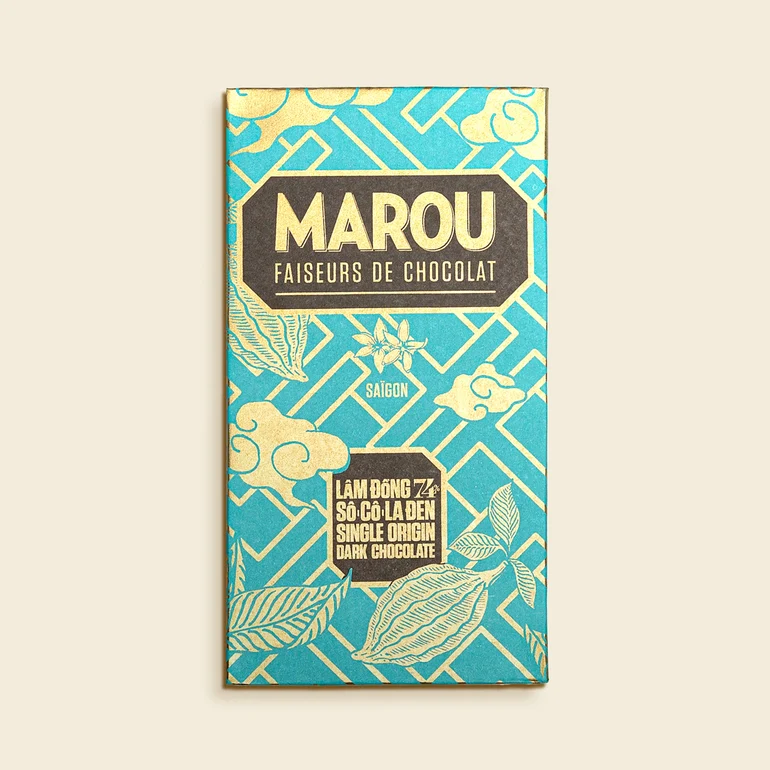
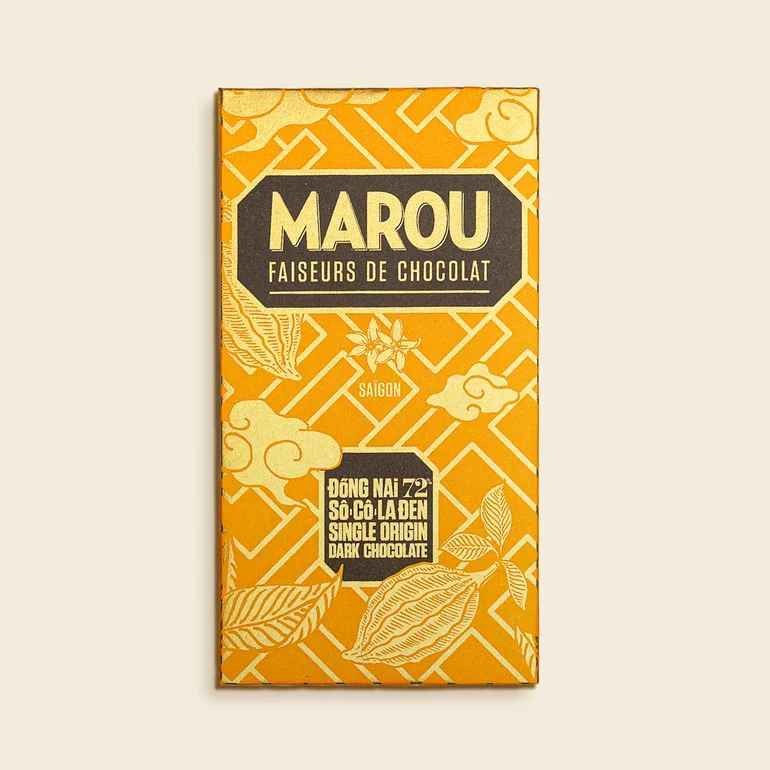
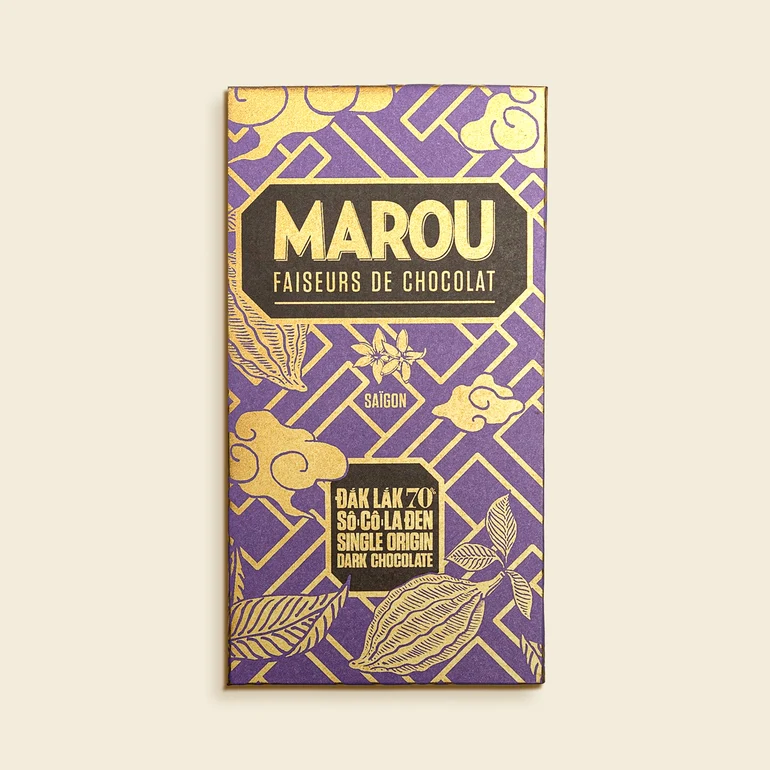
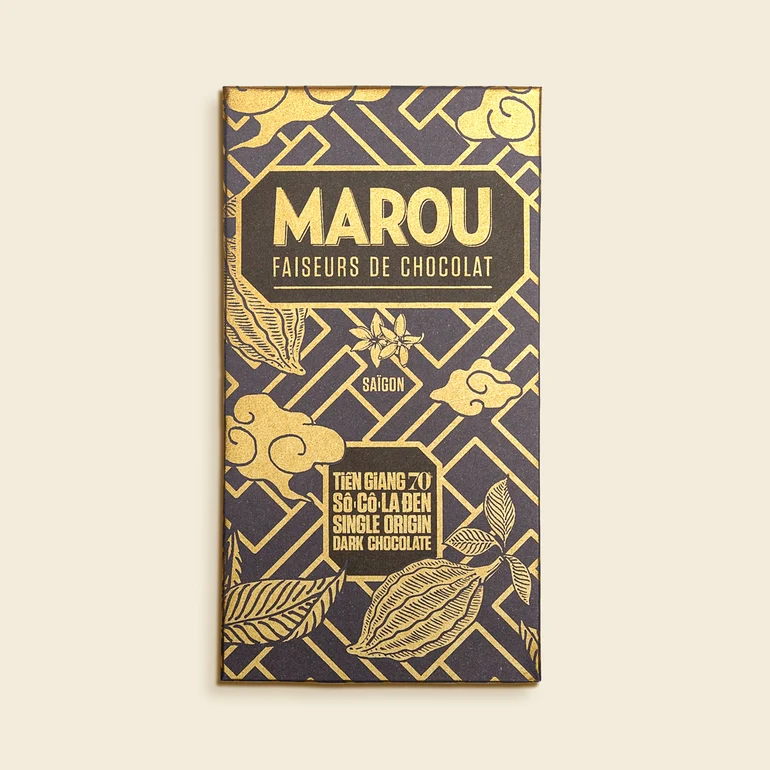
| 70–74% | Tien Giang 70%; Dak Lak 70%; Dong Nai 72%; Lam Dong 74% | Single-origin dark bars from named provinces; origin and recipe still affect character. |
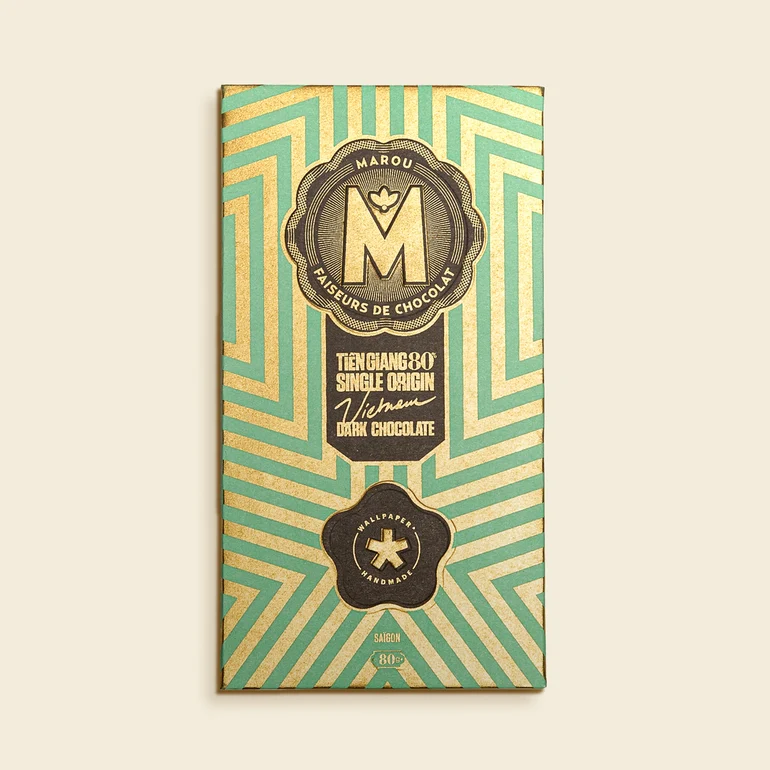
| 80% | Wallpaper* Tien Giang | Marou’s tasting description mentions spice and honey notes; honey is a tasting note, not a listed ingredient claim. |
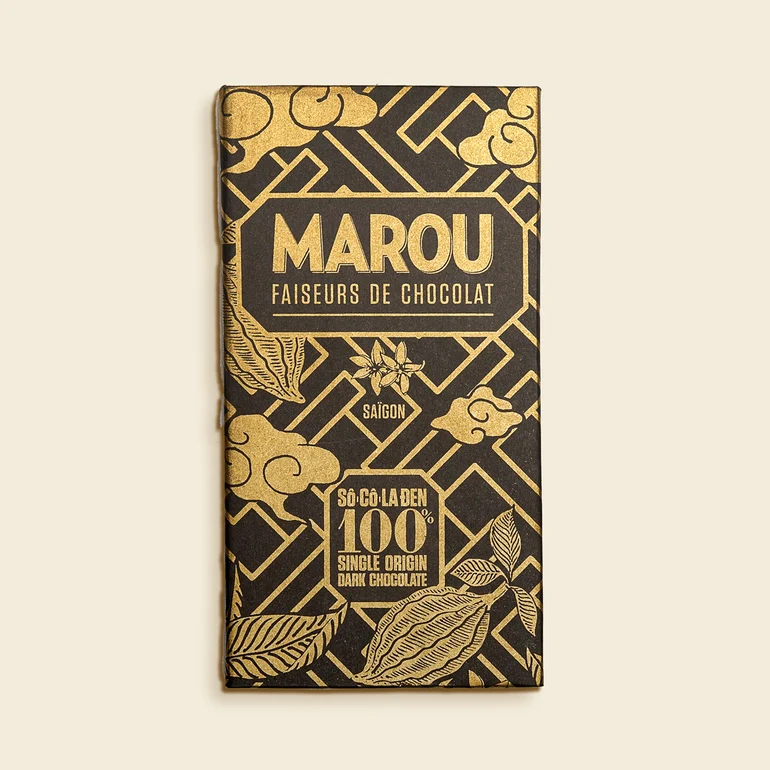
| 100% | Vietnam 100% dark | No added sugar is implied by the percentage alone; check the actual ingredient list and taste expectations on pack. |
Marou describes single-origin bars as using cacao from one province, not necessarily one farm. Its listed cacao-origin provinces are Dak Lak, Lam Dong, Dong Nai, Ba Ria, Tien Giang and Ben Tre. Browse the official chocolate-bar catalogue for current product details; recipes and packaging can change.
Choosing by the person who will eat it
For someone who likes milky, familiar sweets, consider Dark Milk 48% or Ca Phe Sua 44%. The latter is not simply a lower-percentage milk bar: coffee is part of its recipe, so it may not suit someone avoiding caffeine or coffee. For a white-chocolate fan, Vietnamese Vanilla 44% is a more straightforward starting point; Matcha & Coconut 40% brings additional tea and coconut ingredients, which make it a more distinctive choice.
For a curious eater who enjoys local references, Pho Spices 65% is an unusual gift with a clearly documented connection to phở seasoning. Ginger & Lime, Pepper & Pinch of Salt, Mekong Kumquat, and Mint & Orange add named flavors to dark chocolate. The flavor direction is apparent from the names, but personal impressions will vary. For a recipient who already enjoys less-sweet dark chocolate, try a provincial bar such as Dak Lak 70%, Dong Nai 72% or Lam Dong 74%; do not assume the highest number is automatically the best match.
A 100% bar is a specialist pick, not a safe default for a mixed group. If you are unsure, give two different styles rather than choosing one percentage as a proxy for everyone’s taste. Our guide to Marou’s milk, white and coffee bars and Vietnam-inspired flavor bars can help narrow the choice.
A tasting order that lets each bar speak
For a small tasting, start with white chocolate, then move to milk or coffee-and-milk, followed by lower-percentage dark bars and then more cacao-forward selections. One possible sequence is Vanilla White or Matcha & Coconut, Dark Milk or Ca Phe Sua, Arabica Coffee 64%, Pho Spices 65% or one of the fruit-and-spice bars, a single-origin 70–74% bar, Wallpaper* 80%, and finally 100% if everyone wants to try it.
This is a practical serving order, not a ranking or a scientific intensity ladder. Strong additions such as coffee, mint, citrus or spices can remain prominent regardless of percentage. Offer water between samples, break small pieces, and let guests decide what tastes most intense to them.
Gift combinations: match variety to the occasion
| Gift idea | Possible pairing | Why it works |
|---|---|---|
| Easy-to-share introduction | Vietnamese Vanilla White 44% + Dark Milk 48% | Two approachable styles, with different recipes and textures. |
| Vietnam-inspired tasting | Pho Spices 65% + Mekong Kumquat 68% | A spice-led bar beside a citrus-named option; a conversation-starting contrast. |
| Dark-chocolate sampler | Dak Lak 70% + Dong Nai 72% + Lam Dong 74% | Compare provincial origins without treating the numbers as a strict intensity scale. |
| Coffee lover | Ca Phe Sua 44% + Arabica Coffee Lam Dong 64% | Two different coffee-and-chocolate approaches; note coffee and milk ingredients where applicable. |
These are pairing suggestions, not fixed gift sets. Check each wrapper for ingredients, allergens, net weight and product identity. KOKONIC offers selected Marou products as a retailer guide; it is not Maison Marou, and availability may vary by location. You can browse KOKONIC’s store directory or read our practical where-to-buy Marou in Ho Chi Minh City guide. The listed KOKONIC locations include level 3, 42 Nguyễn Huệ; 8 Đồng Khởi at Grand Hotel Saigon; 113Bis Xuân Thủy in Thảo Điền; and 116 Hồ Tùng Mậu. Confirm current selection and store details before visiting.
Packing chocolate in Saigon heat
Marou’s individual official product guidance commonly recommends storing bars in a cool, dry place around 18–25°C. Follow the instructions on the specific wrapper: this is product guidance, not a guarantee that a bar will withstand every travel condition. Keep chocolate away from direct sun, hot car interiors, windows and other heat sources. In Saigon, buy close to the end of your shopping day if practical, and move the bars promptly into air-conditioned surroundings rather than leaving them in a parked vehicle.
Keep bars in their original packaging and place them in a firm, dry part of your carry-on or luggage where they will not be crushed. An insulated pouch may help buffer short temperature swings, but it is not active cooling. Avoid placing chocolate directly against ice packs or frozen items; excessive cold followed by warm, humid air can cause condensation. That moisture can affect the surface and wrapper. Refrigeration is not a dependable fix for a hot travel day, particularly if the bar will be repeatedly taken in and out of a cold space.
If a bar softens or develops a pale, cloudy surface after a temperature change, its appearance may be affected. Do not promise yourself that every bar will arrive pristine; keep it cool and dry and avoid unnecessary temperature swings. More detailed advice is in our percentage, gifting and travel-storage guide—use this page’s practical checklist rather than treating any packing method as a guarantee.
Ingredients, allergies and destination rules
Read the current package, not just the product name. Official product information identifies milk in Vietnamese Vanilla White 44%, Matcha & Coconut White 40%, Dark Milk 48% and Ca Phe Sua 44%; the Matcha & Coconut bar also lists coconut, while Ca Phe Sua lists coffee. Arabica Coffee Lam Dong includes coffee beans in its recipe. Ingredients and allergen statements can change, and shared-production or cross-contact warnings matter to people with allergies. When the consequences of an exposure could be serious, contact the manufacturer and do not rely on a general guide.
Do not assume a bar is vegan, gluten-free or halal unless its current packaging and reliable official product information confirm that status for the exact product. For international travel, food import rules depend on your destination, the ingredients and local regulations. Check the rules of the country you are entering and declare food when required. No general article can guarantee customs clearance.
Common percentage and travel myths
A higher percentage always tastes more bitter. Not necessarily. Recipe, cacao origin and additions influence taste; percentage alone cannot predict it.
Two bars at 70% will taste alike. Not reliably. The province and recipe can differ. Even single origin means one province, not one farm.
White chocolate at 40% is 40% dark cacao. No. In Marou’s Matcha & Coconut White, the 40% refers to cacao butter in a white-chocolate recipe, not dark cacao solids.
The fridge is the safest travel solution. Not automatically. Cold-to-warm transitions can invite condensation. A cool, dry, stable place and the product’s own storage directions are a better starting point.
Frequently asked questions
Is 70% Marou chocolate a good choice for a first-time buyer?
It can be, especially for someone who already enjoys dark chocolate, but it is not a universal starting point. A 64% coffee bar or a 65% spiced bar may feel more distinctive because of its added ingredients. For a sweeter or milkier preference, look at the milk and white options instead.
Does 100% mean the bar has no ingredients other than cacao?
Do not infer a full ingredient list from the front-of-pack percentage. Check the current wrapper or official listing for the exact bar. The percentage is not, by itself, a complete recipe statement.
Can I put Marou bars in checked luggage?
You can choose to pack them there, but checked bags may encounter heat, pressure or delays. A protected place in carry-on luggage can make it easier to avoid hot storage conditions, subject to airline baggage rules. Neither option guarantees that chocolate will remain unchanged.
Where can I check KOKONIC’s Marou selection in Saigon?
Use the KOKONIC store directory and confirm the particular bars with the store before visiting. KOKONIC is a retailer guide, not Maison Marou; products and stock can differ by location. For official product and ingredient details, consult Maison Marou’s chocolate-bar catalogue.