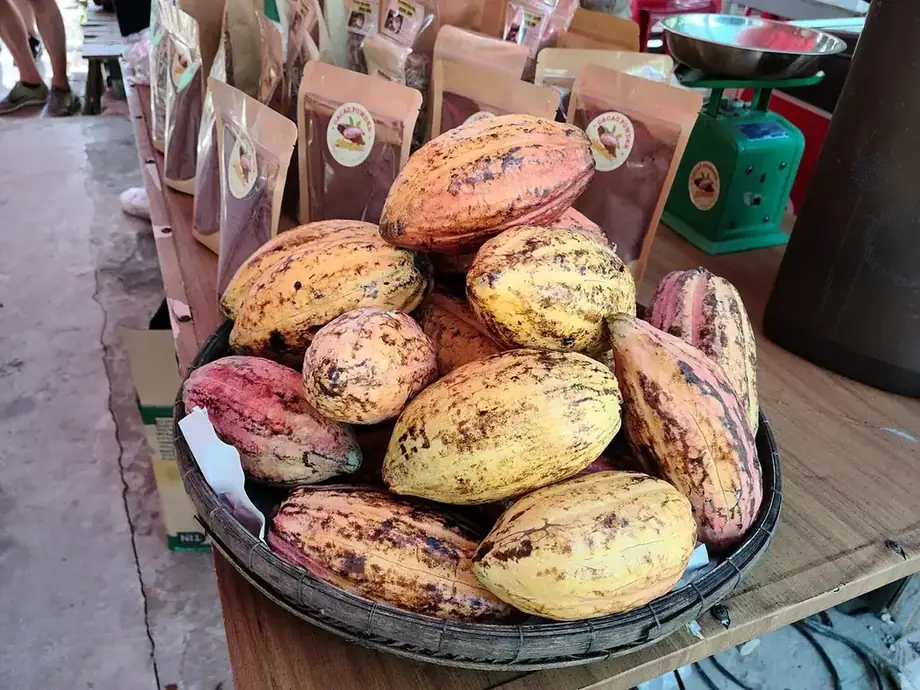
Dark chocolate makes a compact gift, but choosing a bar marked 70% or 85% does not tell you everything about how it will taste. The percentage refers to cacao-origin components in the chocolate; the remaining ingredients and their proportions also matter. For a useful gift, compare the label and maker’s tasting notes, and think about how the bar will travel in Ho Chi Minh City’s heat.
Start with the percentage, then read the rest
A 65–70% bar can be a practical middle ground for someone who enjoys dark chocolate but may not want the most intense option. Bars around 75–85% contain a higher share of cacao-origin components, while options above that range may suit recipients who specifically like very high-cacao chocolate. These are starting points, not guarantees: percentage alone does not establish sweetness, bitterness, or flavor.
Check the ingredients for sugar, cocoa mass or cocoa solids, cocoa butter, and any added flavorings. Two bars with the same percentage can taste different because their recipes differ. Use the maker’s printed tasting notes as clues, not promises that every person will taste the same thing.
Match the bar to the recipient
For someone whose preferences you do not know, consider a moderate percentage and a clearly described flavor profile rather than choosing the highest number. For a keen dark-chocolate fan, a higher-percentage bar may be a more interesting present, provided the recipient enjoys that style. If you are buying several gifts, a small selection of different percentages lets each person choose.
Pairings can help make the gift feel considered. A bar with fruit or floral notes described on its packaging may suit dried fruit or tea; a bar described as roasted or nutty may work well alongside coffee. These are serving ideas, not claims about every bar. Check for actual added ingredients before presenting a pairing as allergy-safe.
Compare bars at a glance
| What to check | What it helps you judge | Gift-useful question |
|---|---|---|
| Cacao percentage | The share of cacao-origin components | Does the recipient like moderate or very high-cacao chocolate? |
| Ingredients | Added sugar, flavorings, and possible allergens | Is anything included that the recipient avoids? |
| Tasting notes | The maker’s description of the flavor | Do those notes sound appealing to this person? |
| Pack and date label | Protection and freshness information | Is the wrapper intact, and is the best-before date suitable? |
Check ingredients and allergen warnings
Read the full ingredient list, not just the front label. Look for milk, tree nuts, and other ingredients the recipient may avoid, and check any “may contain” or shared-facility warning for possible cross-contamination. A high cacao percentage does not mean a bar is dairy-free or free from nut traces.
If the ingredient or allergen information is unclear, choose a different bar rather than guessing. Keep the original wrapper with the gift so the recipient can review the label. For dietary needs, avoid describing a product as safe unless its packaging clearly supports that claim.
Inspect the pack and best-before date
Choose a bar with an intact wrapper and readable ingredient and date information. Check the best-before date before buying, especially if the gift will be carried for a while before it is given. If a bar is sold in a box, check whether the actual chocolate is also sealed inside; decorative packaging is not a substitute for a protective inner wrap.
Look for storage instructions on the label and follow them. If the package gives no special directions, keep the chocolate away from direct sun, hot surfaces, and damp conditions. You can browse other souvenir ideas while comparing gift options.
Protect chocolate in tropical travel
Heat can soften chocolate and affect its finish, while humidity and abrupt temperature changes can cause problems for the surface or packaging. Keep bars in their original wrappers and add a firm outer case so they are not crushed. Carry them in a shaded, temperature-stable part of your luggage rather than leaving them in a parked vehicle or exposed to sun.
Avoid moving a warm bar straight into a cold, humid environment: condensation can form on the wrapper or chocolate. If you use refrigeration because the chocolate has become too warm, keep it sealed and let it return gradually toward room temperature before opening. For long journeys, check the destination’s current food-import rules and your carrier’s current baggage guidance; requirements can vary.
A quick buying checklist
- Choose a percentage that fits the recipient’s known taste; do not use the number as a bitterness guarantee.
- Compare the ingredients and tasting notes on two or more bars.
- Check milk, tree-nut, and cross-contamination warnings against the recipient’s needs.
- Inspect the seal, protective packaging, storage directions, and best-before date.
- Plan a shaded, crush-protected place in your luggage and check relevant travel rules.
Frequently asked questions
Is 85% chocolate always more bitter than 65%?
Not necessarily. A higher percentage means a greater share of cacao-origin components, but the recipe and ingredients also affect flavor. Read the maker’s notes and treat them as a guide rather than a universal prediction.
Does a high cacao percentage mean the bar contains no milk or nuts?
No. Check the full ingredients and allergen statement, including cross-contamination warnings. Percentage alone does not indicate whether a bar is free from milk, tree nuts, or traces of them.
Should I refrigerate chocolate before flying home?
Not automatically. First follow the package’s storage instructions and keep the bar cool, dry, shaded, and protected from crushing. If refrigeration is necessary, keep it sealed and let it warm gradually before opening to reduce condensation risk.
Further reading: Vietnam Tourism
Travel Saigon is operated by KOKONIC. Product ranges and store hours may change; confirm current details before visiting.