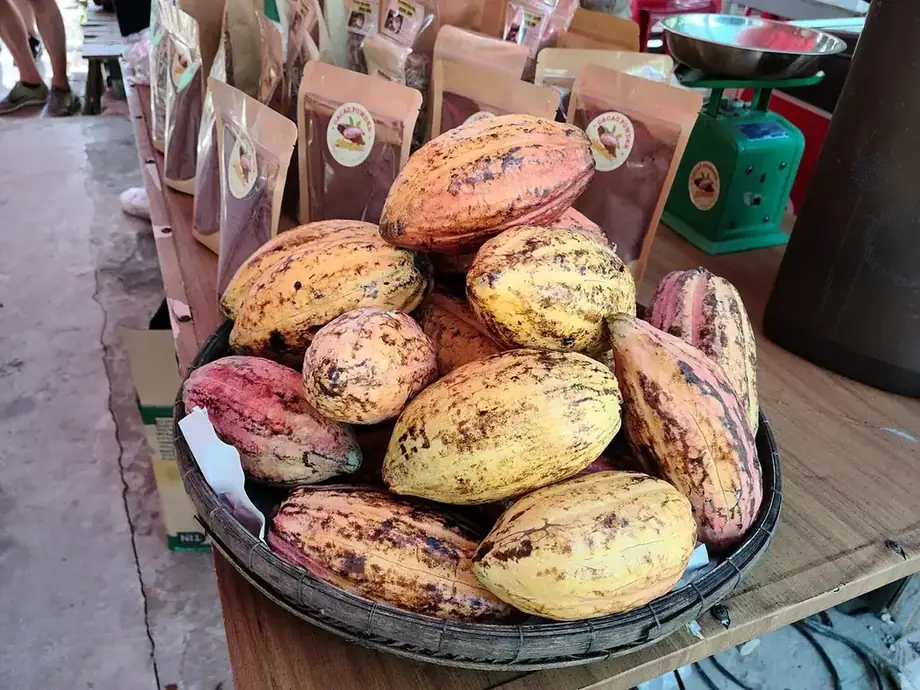
Start with what “single origin” actually says
A single-origin claim is useful only if you can tell what place it refers to and what the maker is claiming about the cacao. Read the wording on the bar rather than inferring a specific farm, district, or region from a Vietnamese brand name or design. Treat a regional origin assertion as substantiated only when the package provides credible certification or traceable supporting information; do not assume every attractive map or place name is proof.
If origin matters to your purchase, look for a clearly named origin and an explanation of the claim’s scope. A label may describe where cacao was grown, where it was processed, or both; those are different details. When the pack does not make the distinction clear, ask the seller or choose a bar with more transparent information.
Cacao percentage is not a bitterness scale
The percentage indicates the share of cacao-derived ingredients stated by the maker, but it does not, by itself, predict how bitter a bar will taste. Sweetness, the proportions of cacao ingredients, and processing all affect the result. Compare the ingredient list and any tasting description alongside the number rather than choosing only by the highest percentage.
| Label clue | What it can help you assess | What it does not prove alone |
|---|---|---|
| Cacao percentage | The stated cacao proportion | How bitter or sweet the bar will taste |
| Origin wording | The maker’s stated place or sourcing claim | That a named region is independently verified |
| Ingredient list | Listed components and their order | A complete tasting profile |
Read ingredients and allergen information
Check the full list, not just “dark,” “milk,” or a cacao percentage on the front. Ingredients reveal whether sugar, milk ingredients, or other additions are listed; allergen information can flag concerns relevant to the recipient. If someone has an allergy or dietary restriction, do not guess from the bar’s colour or marketing language. Ask the seller about unclear wording, and choose another product if you cannot establish that it suits the person.
The ingredients can also help explain why two bars with similar percentages taste different. Look at what else is included and how prominent sugar is in the list. A simple label does not guarantee a particular flavour, but it gives you more useful information than percentage alone.
Look for a maker’s account of processing
Cacao processing influences the finished chocolate, and a producer’s description can add context to an origin claim. Give more weight to specific information about the cacao and how it was handled than to broad phrases such as “local” or “artisan” on their own. A short producer story may explain sourcing or choices in making the bar, but it is not independent verification; distinguish an account from evidence supporting a factual origin claim.
Vietnamese makers can have distinctive stories and approaches, yet no single story represents every producer. If you want a gift with a personal connection, choose a bar whose packaging explains its maker and sourcing clearly rather than relying on a generic national label.
Consider heat before choosing a gift
Chocolate is sensitive to heat, and a warm journey can affect its surface and appearance. Read any storage advice on the wrapper, keep the bar away from direct heat where practical, and avoid leaving it in a hot vehicle or exposed luggage. Do not assume a paper sleeve or gift box is insulated.
If you are flying, plan the bar’s place in your luggage with both temperature and crushing in mind. Check current airline baggage rules and destination requirements if carrying food across a border. A bar that has softened may still be packaged, but its appearance and texture may not match what the recipient expects; for a long or hot journey, consider whether a chocolate gift is practical at all.
A practical label-reading checklist
- Identify the exact origin claim and look for traceable support or relevant certification.
- Read the cacao percentage alongside the ingredients—not as a bitterness rating.
- Check sugar, milk ingredients, and allergen information for the recipient.
- Read storage guidance and inspect the wrapper and box for damage.
- Consider heat, crushing, airline rules, and destination food requirements before packing.
For more gift ideas, explore the Vietnam souvenirs guide; choose chocolate only if you can protect it on the journey and its label fits the recipient’s needs.
Frequently asked questions
Does a higher cacao percentage always mean darker or more bitter chocolate?
No. The percentage alone does not determine bitterness. Sugar, the mix of cacao ingredients, and processing also shape flavour, so compare the full ingredient list and any maker’s tasting notes.
Does “single origin” prove the cacao came from the named Vietnamese region?
Not on its own. Read the exact claim and look for traceable supporting information or relevant certification. If the packaging does not explain what the origin refers to, ask the seller rather than treating a place name as proof.
How should I carry chocolate home in warm weather?
Follow the package’s storage advice, protect the bar from direct heat and crushing, and avoid leaving it in a hot place. Check current travel and destination rules for food; if you cannot keep it in suitable conditions, choose a less heat-sensitive gift.
Travel Saigon is operated by KOKONIC. Product ranges and store hours may change; confirm current details before visiting.