Start with how you plan to use it
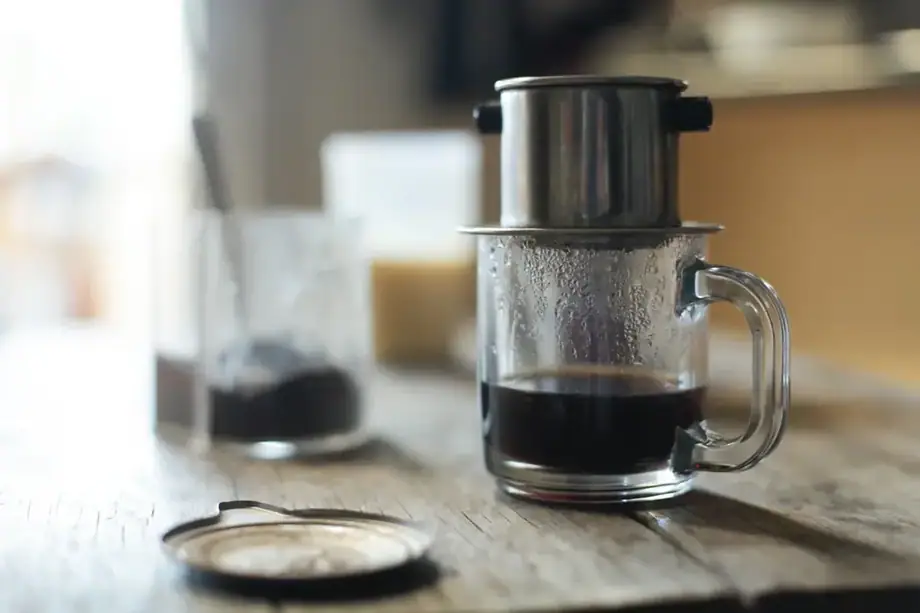
A phin is a small metal filter used to brew coffee directly into a cup. Most designs have a brewing chamber with holes, a perforated insert or press, and a lid. Before comparing finishes, decide whether you want a compact single-cup brewer, a larger size, or a present that includes coffee as well as the filter. If you already own a favorite mug, bring its approximate opening size or dimensions: a filter that sits securely over the cup is more useful than one chosen on appearance alone.
Aluminum or stainless steel?
Aluminum phins are generally light to carry, which can be appealing if luggage space matters. Stainless-steel versions tend to feel heavier in the hand. Neither material guarantees a better cup: brewing depends on the coffee, grind, dose, water and fit of the parts, not just the metal. Compare the actual examples rather than assuming every filter made from one material has the same finish or construction.
Look over the inside and outside for rough seams, sharp edges, dents or parts that wobble. Run a finger carefully around the rim, without pressing hard, and check that the base sits evenly on a flat surface. A smooth edge is more comfortable to handle and less likely to snag a cloth or pouch in your bag.
Check the press and lid in the shop
The insert should sit inside the chamber without obvious rocking or catching. If it is a separate piece, lift and replace it a few times; it should be manageable rather than so tight that it is difficult to remove. A press that fits poorly can allow grounds to shift, while an overly forceful press may make cleaning awkward. There is no single fit that suits every design, so inspect the particular filter you intend to buy.
Set the lid on top and see whether it rests securely. It need not form a sealed container, but a loose lid can fall off during storage. Ask the seller whether the parts are intended to nest together for packing, and check whether the set includes a small pouch or box rather than assuming it does.
Match the filter to the coffee grind
Phin coffee is commonly brewed with grounds rather than whole beans. Choose a grind intended for a phin or a medium-to-coarse grind if the package gives that guidance. Very fine powder may pass through the holes or slow the drip; grounds that are too coarse for the particular filter may let water pass quickly. The right result also depends on the filter’s hole pattern and how firmly the insert sits, so avoid promises that a particular phin will always brew at a certain speed.
If buying coffee at the same time, read the label for the grind type and any brewing directions. A bag marked for another brewing method may still be usable, but it may need adjustment. For a gift, a phin and a clearly labeled bag of suitable ground coffee make a more immediately useful bundle than a filter alone.
A simple first brew
Rinse the filter and cup with hot water, then add coffee according to the coffee maker’s or roaster’s directions. Set the insert gently over the grounds; do not compress them aggressively. Pour a little hot water over the coffee and allow it to absorb, then add more water and put the lid on. Let it drip into the cup, adjusting the grind or amount next time if the flow seems too fast or slow. There is no guaranteed brewing time or strength: follow the coffee label and adapt to your taste.
Choose a gift set—and pack it sensibly
A practical bundle pairs a phin with coffee whose roast date, grind and ingredients are legible. Check whether the coffee is ground or whole bean, and whether it is plain coffee or a flavored blend. Keep the original sealed coffee packaging so the recipient can see its label. For the filter, make sure all loose components are included and wrap the metal parts separately from delicate items. A heavier steel filter may be less convenient in a tight luggage allowance; a lighter aluminum one can be easier to carry, but inspect it for dents before packing.
Travel Saigon is operated by KOKONIC. For more ideas, browse our Vietnamese souvenir guide and Saigon store guide.
Quick buying checklist
- Choose a size that fits your cup and intended use.
- Compare aluminum and steel by actual weight, finish and feel.
- Check the rim, base, insert fit and lid; confirm all pieces are included.
- If buying coffee, read grind, roast-date and ingredient information.
- Pack the filter so its edges and loose parts cannot damage other luggage.
FAQs
Will a stainless-steel phin make stronger coffee than an aluminum one?
Not by itself. Strength is affected by the coffee, grind, amount of water and brewing choices. Select the material for weight, feel and construction, then adjust the recipe to taste.
Can I use any ground coffee in a phin?
You can experiment, but very fine grounds may clog or pass through, depending on the filter. Look for phin-specific guidance or start with a medium-to-coarse grind and adjust.
Is the lid meant to seal the filter for travel?
Usually it is a brewing or cover component, not a travel-proof seal. Check how the pieces fit and pack the filter in a pouch or wrap rather than carrying coffee loose inside it.
Further reading: Vietnam Tourism
Travel Saigon is operated by KOKONIC. Product ranges and store hours may change; confirm current details before visiting.